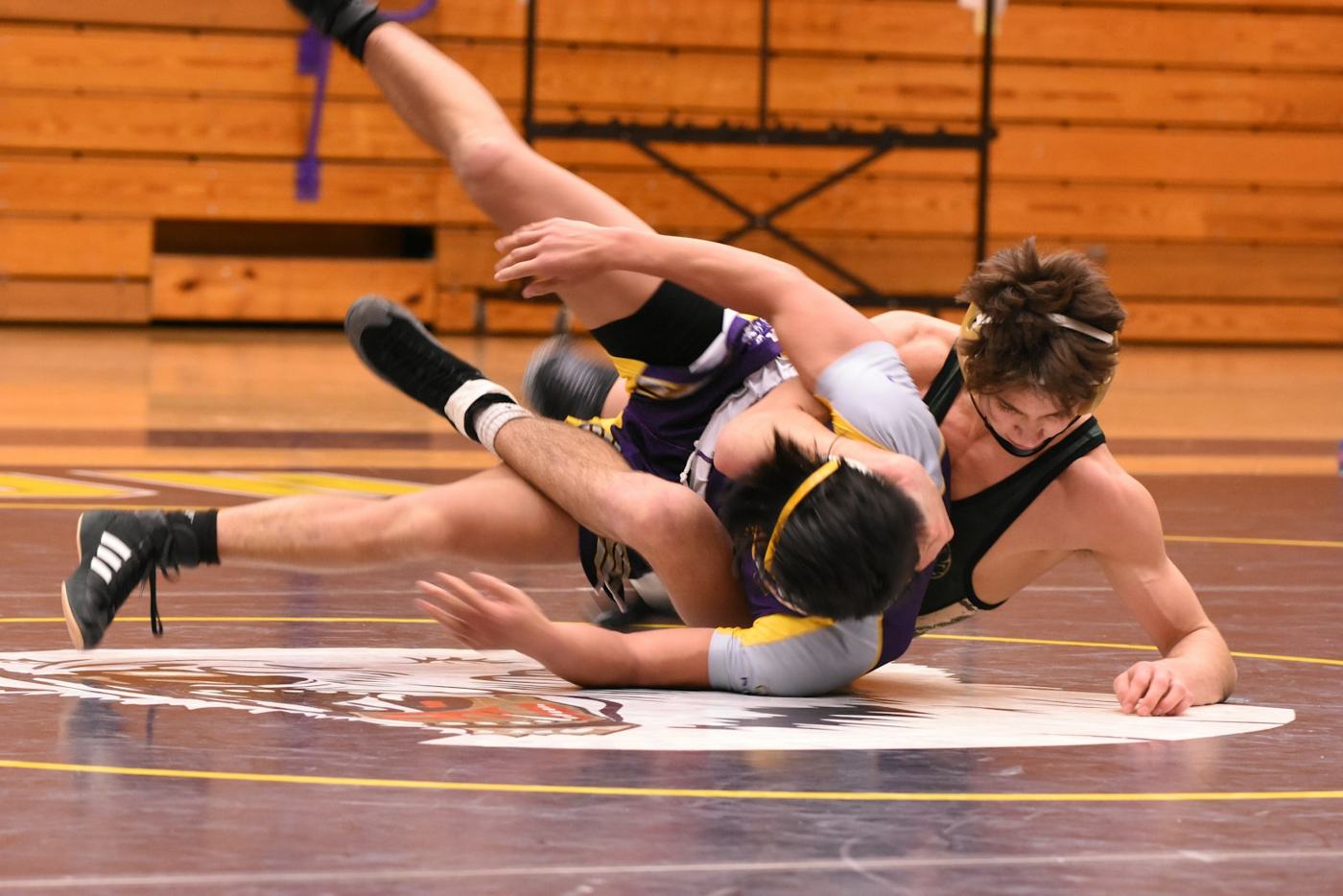
Girls high school wrestling has its own weight classes, with states choosing an NFHS set of 12, 13, or 14 divisions NFHS. College women’s wrestling uses 10 classes, from 103 lb through 207 lb NCAA women’s rules. The right list for you depends on your school, state, and level of competition.
High school girls wrestling weight classes
| # | 12-class set (lb) | 13-class set (lb) | 14-class set (lb) |
|---|---|---|---|
| 1 | 100 | 100 | 100 |
| 2 | 107 | 106 | 105 |
| 3 | 114 | 112 | 110 |
| 4 | 120 | 118 | 115 |
| 5 | 126 | 124 | 120 |
| 6 | 132 | 130 | 125 |
| 7 | 138 | 136 | 130 |
| 8 | 145 | 142 | 135 |
| 9 | 152 | 148 | 140 |
| 10 | 165 | 155 | 145 |
| 11 | 185 | 170 | 155 |
| 12 | 235 | 190 | 170 |
| 13 | 235 | 190 | |
| 14 | 235 |
Source: NFHS. Each state picks one set.
Use the official girls table above to find the divisions offered under each NFHS option. Look at the column for the set your state uses, rather than picking a weight from another column. A weight class is a competition category, not a goal you need to reach just because it appears close to your current weight.
The NFHS announced separate girls weight classes on May 3, 2021, and the change took effect for the 2023-24 season NFHS. That means the girls list is not simply a copy of the boys list. When you search for wrestling weight classes, make sure the chart is labeled for girls and matches the rules your school follows.
The weights shown in a class chart are division limits. They do not tell you whether a lower class is suitable for your body, how you should eat, or what your certified minimum will be. Keep the class chart and your certification result separate until you have checked both. For a broader comparison with other divisions, see the wrestling weight classes overview.
Which states use 12, 13, or 14 girls wrestling classes?
These are the girls class sets shown on the state wrestling pages on this site. Use the list to find your state, then check its state page and handbook before entering a meet. A school schedule or tournament document can help confirm which divisions will appear at your event.
| Girls class set | States |
|---|---|
| 12 classes | Alabama, Alaska, Arizona, Maine, Massachusetts, New Hampshire, New Jersey, North Carolina, Virginia, Wisconsin |
| 13 classes | North Dakota, Pennsylvania |
| 14 classes | Arkansas, California, Colorado, Florida, Georgia, Hawaii, Idaho, Illinois, Iowa, Kansas, Montana, New Mexico, Ohio, Oklahoma, South Dakota, Texas, Washington, Wyoming |
If your state is not in this table, do not guess which set applies. Ask your coach or athletic association which girls divisions are in use. The absence of a state from this list does not tell you what its next tournament will offer.
Also, pay attention to the difference between a published state class list and the class you can actually enter. Your weigh-in result and school eligibility process matter too. A class that appears on the schedule is not automatically a safe or approved choice for you.
The 2026-27 change: 19% body fat minimum for girls
For the 2026-27 season, the NFHS raised the female minimum body fat percentage used in high school wrestling weight-control rules from 12% to 19% NFHS.
This change affects how a girl’s minimum wrestling weight is established. Think of your certified minimum as a limit on how low your plan can go, not as a challenge to reach the lowest possible number. Your usual body weight, how you feel in practice, and the class you can compete in comfortably deserve attention as well.
Rule check: Your preferred division and your certified minimum weight are different things. If the class you want would mean going below your assessed minimum, do not try to force the scale down. Talk with your coach and the person handling your school’s certification process about a suitable class instead.
Use the weight certification calculator to understand how an estimated minimum wrestling weight relates to your possible class. Treat its output as a planning aid. Your school’s official assessment, rather than an estimate entered online, is the basis for your actual decision.
Team weigh-in option for girls wrestling
The NFHS also approved an option to weigh in by team when that is more practical, as part of the 2026-27 high school wrestling changes NFHS.
This is about how a weigh-in can be organized. It is not a reason to assume your division limit, certification result, or personal preparation changes. Ask your coach how the meet will handle check-in and weigh-ins, especially if you are visiting another school or attending a tournament with a different routine.
Before the event, confirm where your team meets, what you should bring, and when you need to be ready. Keep the plan simple. Eat and drink normally as appropriate for training and ask a qualified health professional for individual guidance if you are unsure about fueling or hydration.
College women’s wrestling weight classes
| # | NCAA women (lb) | kg |
|---|---|---|
| 1 | 103 | 46.7 |
| 2 | 110 | 49.9 |
| 3 | 117 | 53.1 |
| 4 | 124 | 56.2 |
| 5 | 131 | 59.4 |
| 6 | 138 | 62.6 |
| 7 | 145 | 65.8 |
| 8 | 160 | 72.6 |
| 9 | 180 | 81.6 |
| 10 | 207 | 93.9 |
Source: NCAA women’s rule book 2026-27. Kilograms converted.
The NCAA women’s table above is for college competition. Do not use your high school state’s chart to choose a college division. The names of the categories may look familiar, but the actual limits are different. If you are moving from high school to college, start with the college list and your program’s eligibility guidance.
For NCAA women, the 207 lb class has a minimum entry weight of 146 lb; weigh-ins take place no more than two hours before competition, with a two-hour default unless coaches agree on a shorter interval NCAA women’s rules.
The upper class deserves special attention because its label alone does not explain who can enter. Likewise, the time between stepping on the scale and competing makes preparation important. Rather than counting on a last-minute change in body weight, plan around normal meals, hydration, rest, and your team’s instructions.
For more context on college wrestling divisions, see the NCAA wrestling weight classes guide. Check that you are looking at the women’s rules when making decisions for women’s competition.
How to choose your weight class as a girl wrestler
Start with the weight you can maintain while eating enough to train and recover. Then compare that with the classes your school actually offers. The class just below your usual weight might look tempting, but being able to reach a number on a scale does not prove it is a good fit.
Consider these questions with your coach:
- Are you eligible for that division? Compare your official certification result with the class you have in mind.
- How do you feel at your current weight? Notice your energy, focus, strength, and recovery during regular practice.
- Can you fuel your training? Choose a plan that leaves room for meals, fluids, and recovery rather than constant worry about the scale.
- Is the timing realistic? Look at upcoming meets, school demands, travel, and how much preparation you have.
- Would moving up make more sense? Competing at a higher class may be the better choice if maintaining a lower weight leaves you tired or distracted.
Safety: Avoid saunas, sweat suits, rubber or plastic suits, spitting, diuretics, laxatives, vomiting, fasting, and cutting off water to make weight. These approaches can be dangerous and go against the spirit of wrestling’s weight-control rules. If you are having trouble eating enough, staying hydrated, or recovering from practice, tell a parent, coach, athletic trainer, or qualified health professional.
A good choice should support the wrestler you are throughout the season, not only the number you see at weigh-in. Your body may change as you grow and train. Revisit the decision if your energy, health, or comfort changes instead of assuming you must stay in the same class.
What to do next
First, find your state in the list above and open the relevant state handbook. Then check the girls divisions available for your meet, review your official minimum wrestling weight, and talk with your coach before committing to a class. If you’re comparing possible divisions, the weight class finder can help you see the options in context.
Once you know your class and weigh-in date, keep your preparation focused on steady meals, enough water, practice, and recovery. CutCoach can build a day by day plan covering calories, water, meals, and refueling after the scale using your weight, weight class, and weigh-in date. Use a plan as an organizing tool, not permission to ignore your body’s signals or override official eligibility guidance.
Your best next step is to enter a class you can approach with confidence and enough energy to wrestle well. If that means staying where you are or moving up, it is still a sound choice.