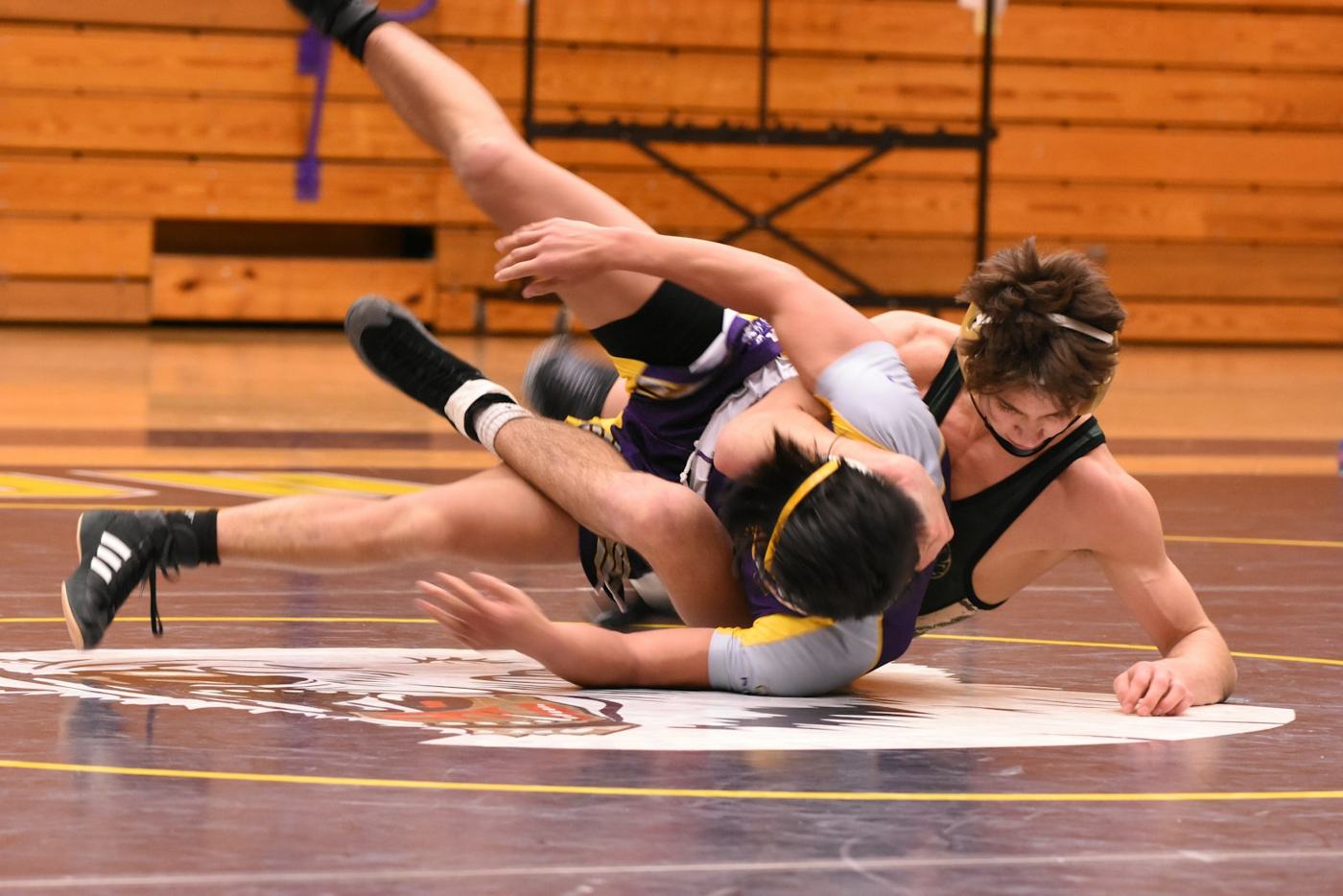
Weight cutting should never mean starving or dehydrating your wrestler. High school wrestling has rules to protect athletes, including a certified minimum weight and a limit on how fast they can lose weight. As a parent, your job is to help your wrestler stay healthy, fueled and strong, not to push them toward the lowest possible number on the scale.
What parents should know about wrestling weight cutting
Your wrestler may talk about dropping a weight class, making weight for a tournament or getting closer to their competition weight. These conversations are common in wrestling, but they deserve your attention.
There is a difference between managing weight over a season and trying to force the scale down right before a match.
Healthy weight management involves regular meals, normal hydration, enough sleep and a realistic competition weight. It should not leave your wrestler exhausted, hungry all the time or afraid to eat.
Start by asking your wrestler what weight class they want to compete in and why.
Are they comfortable at their current weight? Is a coach suggesting a lower class? Do they believe being lighter automatically makes them more competitive?
Listen before offering advice. Your wrestler may feel pressure from teammates, opponents or their own expectations.
Rule check: A weight class is not a goal your wrestler should pursue at any cost. Their official certification, physical development and health should guide the decision.
You do not need to become a nutrition expert. You do need to know who oversees the weight management process, what your wrestler’s official limits are and when to ask for help.
How does wrestling weight certification work?
Before planning a weight cut, ask your school for your wrestler’s certification results.
Weight certification is an assessment used to establish an athlete’s minimum wrestling weight. It is not simply a coach looking at the scale and choosing a division.
The process starts with hydration testing.
At the initial assessment, the urine specific gravity must be 1.025 or lower; if the wrestler fails, body fat testing is postponed and the state determines the retest wait, while schools record assessments and weigh-ins in the NWCA Optimal Performance Calculator (OPC) on TrackWrestling, which calculates the descent plan. GIAA Weight Management Handbook
After hydration testing, the body fat assessment helps establish the minimum weight.
The NFHS minimum body fat floor is 7% for boys, while the girls’ floor increased from 12% to 19% beginning with the 2026-27 season. NFHS
The formula divides fat-free weight by one minus the body fat floor: a boy at 150 lb and 12% body fat has 132 lb of fat-free weight and a minimum of about 141.9 lb; the older GIAA handbook also required medical clearance at or below 7% for boys or 12% for girls under its earlier rules. GIAA Weight Management Handbook
Because the girls’ standard has changed, make sure your school is using the current rules.
The NFHS describes weight certification as a process involving the wrestler, parents or guardians, a health-care professional and the coach, and recommends that someone other than the coach, such as an athletic trainer or school nurse, monitor weight. NFHS
You can explore the calculation with the wrestling weight certification calculator. It helps explain the numbers, but your school’s official assessment determines your wrestler’s eligibility.
How much weight can a high school wrestler lose per week?
High school wrestling guidelines limit weight loss to 1.5% of body weight per week. American Academy of Pediatrics
This is a maximum, not a target.
Your wrestler does not need to lose weight at the fastest allowed rate. A slower approach may be better for their energy, strength and recovery.
The official descent plan begins with the assessment and maps out how weight can change during the season. A tournament coming up does not make an aggressive last-minute cut a good idea.
Here is how to think about the plan as a parent:
| What to check | What it tells you |
|---|---|
| Certified starting weight | Where the official plan begins |
| Minimum wrestling weight | The lowest weight approved through certification |
| Weekly descent | How the school tracks gradual weight changes |
| Target weight class | Whether the intended division fits the official plan |
| Upcoming weigh-ins | Whether the schedule is realistic |
Ask to see the actual descent plan rather than relying on a verbal promise that your wrestler will make weight.
You can use the wrestling descent plan calculator to understand how the schedule works.
Safety: Staying within the maximum weekly limit does not automatically make a weight-loss plan healthy. Your wrestler still needs enough food, water and recovery to train and grow.
What does healthy weight loss look like for a teenage wrestler?
Teen athletes are still growing. Their bodies need energy for school, daily life, physical development and demanding workouts.
Healthy weight management starts with eating enough, not finding ways to eat less.
The American Academy of Pediatrics recommends no more than 1 lb of weekly weight loss for a growing athlete with excess body fat and up to 2 lb for a mature athlete, considers more than 2 lb per week unhealthy, and cites research where losing 0.7% per week supported lean mass and strength better than losing 1.4%. American Academy of Pediatrics
These recommendations show why slower weight changes deserve serious consideration.
A balanced eating pattern should include:
- Carbohydrates: Rice, potatoes, oats, pasta, fruit and other foods that help fuel training
- Protein: Eggs, chicken, fish, beans, yogurt and other foods that support muscle repair
- Healthy fats: Nuts, olive oil, avocado and other sources of dietary fat
- Fruits and vegetables: Foods that provide vitamins, minerals and fiber
- Regular fluids: Water throughout the day, including around training
Your wrestler needs enough calories to support both wrestling and normal growth. Teen calorie needs can be especially high, and a restrictive diet can work against the strength and recovery they are trying to build.
There is also no single perfect body fat percentage for every growing athlete. A realistic, healthy range is more useful than chasing an exact number.
If weight loss is genuinely appropriate, discuss the goal early, preferably before the competitive season. Once your wrestler reaches a suitable weight, aim for stability rather than repeated cutting and regaining.
A registered dietitian familiar with young athletes can help you build a plan around training, growth and family meals.
For some wrestlers, the healthiest decision is to remain in their current class or move up.
What unhealthy weight-cutting methods should parents watch for?
Some harmful practices are treated as normal parts of wrestling culture. That does not make them safe.
The NFHS warns that dehydration can cause life-threatening heat illness, rhabdomyolysis, kidney failure and cardiac arrest, and calls for prohibiting excessive food and fluid restriction and heat-based weight-cutting practices. NFHS
Watch for these dangerous behaviors:
- Skipping meals or severely restricting food
- Deliberately limiting water before a weigh-in
- Wearing plastic, rubber or nonbreathable suits to sweat
- Using saunas, steam rooms, hot rooms or heated boxes to lose water
- Exercising excessively just to change the scale
- Spitting to reduce body weight
- Taking laxatives, diuretics, diet pills or stimulants for weight loss
- Self-induced vomiting
These methods can damage health and are against the spirit of wrestling weight management rules.
Do not assume your wrestler would tell you if they were trying something dangerous. Some athletes hide these behaviors because they fear losing their place in the lineup.
Keep the conversation open and make it clear that health matters more than making a particular class.
What warning signs mean a wrestler needs help?
Pay attention to changes in how your wrestler feels and behaves, not just what the scale says.
Warning signs include:
- Dizziness, lightheadedness or fainting
- Unusual tiredness or weakness during practice
- Frequently skipping meals
- Anxiety around eating or weigh-ins
- Irritability or sudden mood changes
- Trouble concentrating at school
- Declining training performance
- Hiding food habits or exercising in secret
Do not dismiss these signs as a normal part of wrestling.
If your wrestler becomes faint, confused or severely weak, stop the activity and get prompt medical attention. Fainting, especially during exercise, deserves urgent evaluation.
For girls, there are additional concerns.
Low energy availability in adolescent female athletes can contribute to delayed first periods, missed periods, low bone density and reduced peak bone mass. Female Athlete Triad Update
Going more than 90 days without a period, or having a first period at age 15 or later, is identified as a risk marker that warrants medical attention. Female Athlete Triad Clinical Guidelines
Your daughter should never feel that menstrual changes are simply the price of competitive wrestling.
If you notice concerning symptoms, involve a qualified health-care professional and let the coaching staff know that the weight plan needs review.
Why are wrestling weight-cutting rules so strict?
The rules exist because extreme weight cutting has caused real harm.
In 1997, three previously healthy college wrestlers died over 33 days while attempting rapid weight loss, deaths the CDC identified as the first of their kind in national wrestling records dating back to 1982. CDC
These tragedies helped make weight management a major safety concern.
The purpose of certification and monitored descent plans is to move wrestlers away from dangerous last-minute weight loss.
As a parent, you should see these safeguards as a starting point for protecting your child, not as a challenge to find the lowest weight the rules will allow.
A wrestler who is well-fed, hydrated and rested is better positioned to train consistently than someone who spends the week struggling to make the scale.
How can parents support a wrestler at home?
Your daily routines can make a major difference.
Keep family meals regular. Make breakfast, lunch and dinner a normal part of the day. Avoid turning every meal into a discussion about calories or weight.
Pack food for long days. A sandwich, fruit, yogurt or other familiar snacks can help your wrestler eat around school, practice and tournaments.
Support normal hydration. Encourage regular drinking throughout the day. Never help your wrestler restrict water to manipulate a weigh-in or hydration test.
Protect sleep. Teenagers ages 13 to 18 should get 8 to 10 hours of sleep per 24 hours. American Academy of Sleep Medicine
Avoid comments about body shape. Focus on strength, technique, energy and effort. Avoid praising weight loss or comparing your wrestler’s body with teammates.
Ask about practice. Find out how your wrestler feels during drills and matches. Feeling consistently drained deserves attention.
Work with the coach. Tell the coaching staff if your wrestler is skipping meals, feeling faint or showing unusual stress about weight.
Use the wrestling diet plan guide to help structure meals around school and training.
Your wrestler should know they can tell you when something feels wrong without being punished or embarrassed.
What questions should parents ask the wrestling coach?
You should feel comfortable asking direct questions about weight management.
The NFHS lists 14 boys’ weight classes ranging from 106 to 285 lb and 14 girls’ classes ranging from 100 to 235 lb, while states may use sets of 12, 13 or 14 classes. NFHS
Ask the coach:
- What is my wrestler’s officially certified minimum weight?
- Which weight class makes the most sense for their health and development?
- Who is monitoring the descent plan?
- Can I see the assessment and weight management records?
- What happens if my wrestler cannot safely make the planned class?
- How are meals and hydration handled on tournament days?
- Who should my wrestler speak to if they feel pressured to cut weight?
- How does the school communicate concerns to parents?
Also ask about state-specific rules.
Growth allowances and their effective dates are determined by each state association. State wrestling weight classes
For the 2026-27 season, NFHS also permits a team weigh-in option, and byes no longer count toward the limits of six matches per day or 10 matches over a two-day event. NFHS
You can check the wrestling weight classes by state and read the wrestling weight management guide for coaches to better understand the process.
A good coach should be willing to explain the plan and involve you when health concerns arise.
What should parents do next?
Start with a conversation, not a weigh-in.
Ask your wrestler how they feel about their current weight class. Find out whether they feel healthy during practice and whether they are worried about making weight.
Then review their certification with the coach or athletic trainer.
If weight loss is appropriate, involve a qualified health-care professional, make sure the plan is gradual and keep normal meals, hydration and recovery at the center of it.
The CutCoach app can help organize the process. It builds a day by day plan covering calories, water, meals and refueling after the scale, using your wrestler’s weight, weight class and weigh-in date.
Use any planning tool alongside official certification and professional guidance, never as a reason to push below a safe weight.
Your wrestler’s health and development matter more than a particular division. The goal is to help them enjoy wrestling, improve their skills and stay strong throughout the season.