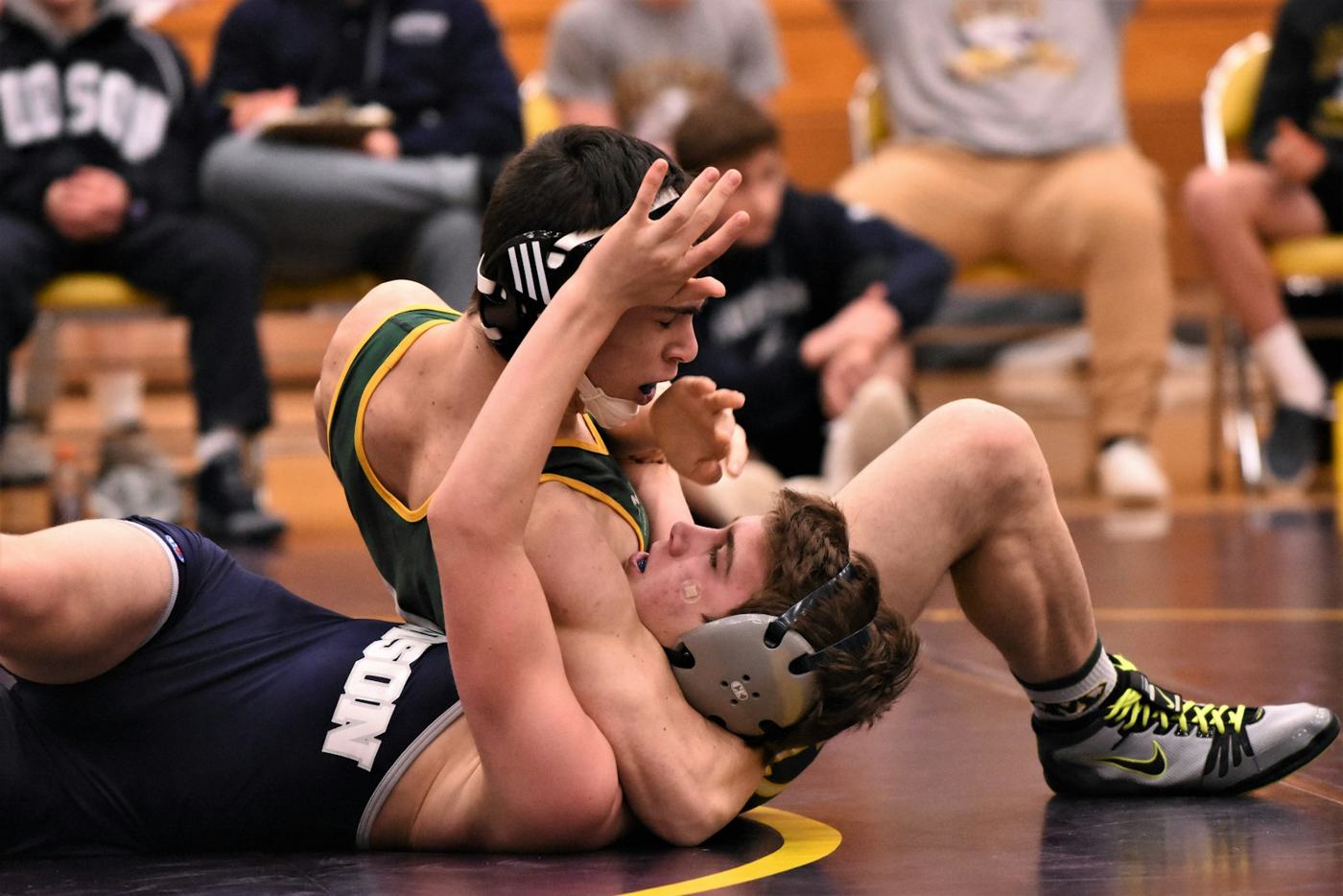
If you want to cut weight for girls wrestling, start with your official weight assessment, not a crash diet. Your assessment helps set the lowest weight class you can safely and legally reach. For the 2026-27 high school season, the NFHS raised the girls’ minimum body fat floor to 19% NFHS.
How does weight cutting work in girls wrestling?
A smart weight plan begins with a simple question: Which class lets you wrestle well while still eating enough to train, recover, and grow?
The scale does not show whether you have enough fuel for hard practices and recovery. Weight cutting should not leave you weak, exhausted, or unable to focus at school.
Ask your coach to explain your high school certification and state rules. College wrestlers should check their program’s separate requirements.
Your goal should be to compete at a weight where you feel strong and healthy, not simply the lowest number you can reach.
Safety: If making a class means skipping meals, ignoring thirst, or trying to lose water quickly, that is a sign to reconsider the class, not to push harder.
What is the 19% body fat rule for girls in 2026-27?
The NFHS changed the high school minimum body fat floor for girls from 12% to 19% starting with the 2026-27 season NFHS.
Older advice online may describe a previous season.
The floor helps calculate your minimum wrestling weight. It is not a fitness score or an ideal body type. You do not need to aim for that percentage.
Old charts and calculators may use outdated values. Ask your coach to explain the system your state uses.
If your results surprise you, speak with the person who oversees certification. Do not try to change your body quickly to match a number on a chart.
How is a girl’s minimum wrestling weight calculated?
Start with fat-free weight, or your weight minus body fat. The formula is:
Minimum wrestling weight = fat-free weight ÷ (1 - body fat floor).
Here is a worked example using the same wrestler’s measurements under the new and old girls’ floors:
| Calculation | Result |
|---|---|
| Assessed weight | 150 lb |
| Measured body fat | 12% |
| Fat-free weight | 132 lb |
| Using the current 19% floor | 132 ÷ 0.81 = about 163.0 lb |
| Using the former 12% floor | 132 ÷ 0.88 = 150 lb |
The new floor makes the calculated minimum higher than this wrestler’s measured weight. Review that result with your athletic staff instead of trying to cut GIAA handbook.
This calculation shows how the body fat floor changes the result. It does not mean every wrestler should try to reach a certain body fat percentage.
Your official assessment determines the weight information you should use for your season.
Explore the math with the wrestling weight certification calculator, but follow your official assessment rather than an online estimate.
What is the hydration test and the 1.5% weekly rule?
At the GIAA assessment, the hydration test comes first: urine specific gravity must be 1.025 or lower, and if you do not pass, your body fat test is postponed until after a 48-hour wait; other states set their own retest periods GIAA handbook.
Drink normally before the test. Do not restrict water or drink excessive amounts to change your result. Too much water can also be dangerous because it can lower your blood sodium Sports nutrition position paper.
The NATA position statement says weight loss should not exceed 1.5% of body weight per week, the same limit high school rules use NATA.
Rule check: The limit is not a target. Some athletes should not lose weight at all.
A descent plan spreads an allowed change across the season instead of leaving everything until the next weigh-in.
Review any schedule from the descent plan calculator with your coach and a healthcare professional.
Avoid last-minute attempts to sweat off weight. The goal is to arrive ready to wrestle, not exhausted from trying to pass the scale.
Can your period affect your wrestling weigh-in?
Yes. Your weight may change around your menstrual cycle because your body holds extra fluid at certain times. A review of women’s wrestling describes how temporary fluid retention can lead athletes to try excessive dehydration before a weigh-in Women’s wrestling review.
A heavier scale reading does not always mean that you gained body fat or lost fitness. These cycle-related changes are often temporary Women’s wrestling review.
Do not respond by cutting water or food. That can leave you tired and underfueled when you need to train.
If your cycle affects weigh-ins, talk with a trusted coach and healthcare professional about a safer plan.
Pay attention to changes in how you feel, too. Your energy, recovery, and menstrual health are more useful signs of how your body is doing than an isolated scale reading.
Your period is health information, not something to hide from your care team.
What warning signs should female wrestlers tell a doctor about?
Weight cutting is not going well if your body begins sending warning signs.
Speak to a healthcare professional if you notice:
- Periods that become irregular or stop after being regular.
- Feeling exhausted, dizzy, unusually cold, or unable to recover between practices.
- Frequent injuries or bone pain.
- Trouble concentrating at school or during training.
- Constant thoughts about food, weight, or the next weigh-in.
The Female Athlete Triad describes how low energy intake can affect reproductive function and bone health, even without an eating disorder Female Athlete Triad update.
Even moderate weight loss can disrupt your menstrual cycle when it comes from an ongoing energy shortage.
If you have gone more than 90 days without a period, or have not had your first period by age 15, these are specific reasons to seek medical evaluation Triad clinical guidelines.
Do not assume that losing your period is proof that you are training hard enough. It can be a warning that your body needs more energy or medical attention.
Tell a parent, school nurse, athletic trainer, or another trusted adult. If someone dismisses your concern, keep asking for medical help.
What does low energy availability mean for a wrestler?
Your body needs energy for school, growth, hormones, and recovery, not just wrestling.
Energy availability is what remains for those needs after training. Eating too little can affect your body even if you finish every practice.
You can be underfueled without looking underweight. Watch for poor recovery, period changes, and bone problems.
There is no single calorie cutoff that tells every athlete whether they are eating enough. Your training, growth, and health needs are personal.
Do not treat hunger as a sign of discipline or try to eat as little as possible.
Eat regular meals with carbohydrates, protein, and varied foods. The wrestling diet plan offers ideas for fueling your season.
If a food plan leaves you tired, hungry all the time, or afraid of eating, talk to a sports dietitian or doctor rather than tightening the plan.
Why do bones, calcium, vitamin D, and iron matter?
Your teen years are a major time for building strong bones. Research on the Female Athlete Triad notes that 40% to 50% of adult bone mineral content is built between ages 11 and 18, with over 80% of peak bone mass built by the end of the second decade Female Athlete Triad update.
Your food choices affect health beyond the next match.
Calcium and vitamin D support bone health. Triad clinical guidance recommends meeting daily needs of about 1,000 to 1,300 mg of calcium and 600 IU of vitamin D Triad clinical guidelines.
Dairy or fortified alternatives can supply calcium. Ask a clinician about vitamin D rather than guessing at supplements.
Iron matters too, particularly for athletes who menstruate or have limited food choices. Female athletes may need more iron than nonathletes, and athletes with greater risk of low iron may need screening Sports nutrition position paper.
Include a variety of nutrient-rich foods in your meals. Avoid removing whole food groups just to make weight.
Ask a clinician about persistent fatigue or suspected low iron before taking supplements.
Can weight-class sports raise the risk of disordered eating?
They can. Weight-class sports are linked to a higher risk of disordered eating in female athletes.
When every competition has a weigh-in, it is easy for the scale to start feeling like a grade for your effort or self-control.
You might begin avoiding team meals, hiding what you eat, or feeling guilty after normal snacks.
These habits matter even if you wrestle well. A healthy plan should not require secrecy, punishment, or fear.
You might feel anxious eating with teammates or panic when your weight changes. You may start believing that eating less always makes you a more dedicated athlete.
That is not what makes a good wrestler.
Tell a trusted adult if this sounds familiar. A parent, counselor, athletic trainer, or doctor can help you protect both your health and your sport.
You deserve support without judgment.
How do you choose the right girls wrestling weight class?
Start with your certified minimum and how you feel at practice. Review the girls wrestling weight classes with your coach.
Ask yourself:
- Can I eat normal meals and feel ready for practice at this class?
- Am I recovering between workouts and sleeping well?
- Is my period normal for me, or have I noticed a change?
- Do I need to force the scale down each time?
- Would moving up a class let me wrestle with more strength and confidence?
A higher class may be better if a lower one causes constant stress or unhealthy habits.
Choosing a weight class is not just about whether you can reach it. It is also about whether you can train well, recover, and stay healthy while competing there.
Families can use the parents’ guide to weight cutting for support.
What should you do next?
Ask your coach to explain your assessment and descent schedule. Choose a class that supports school, sleep, regular meals, and strong practices.
Talk with a healthcare professional before trying to lose weight. A weigh-in deadline does not decide what is safe.
If you have noticed changes in your period, energy, or eating habits, address those concerns before trying to move to a lower class.
CutCoach can build a day-by-day plan for calories, water, meals, and refueling after the scale, based on your weight, weight class, and weigh-in date.
Use any plan as a conversation starter with your support team, not as a reason to override your health or your official certification.
Your best wrestling weight is one where you can compete with strength, confidence, and enough energy to recover afterward.