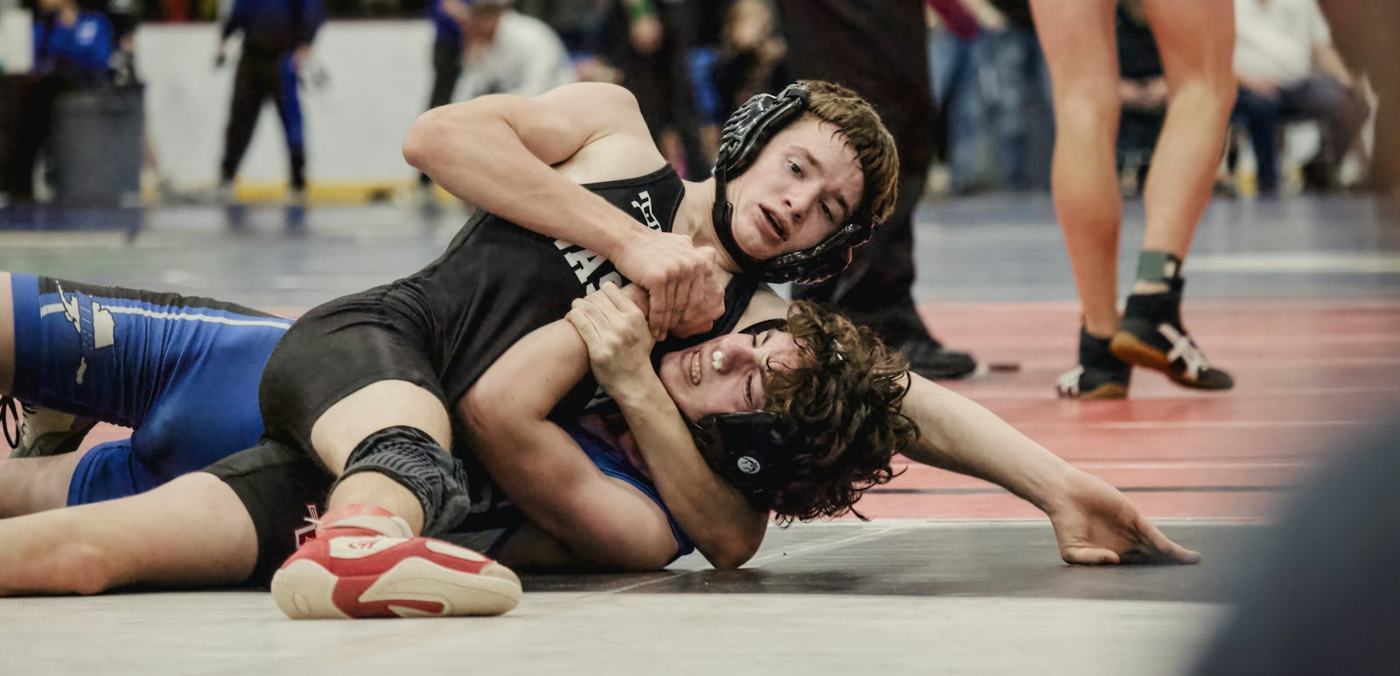
A wrestling weight management program starts with a proper assessment, a certified minimum weight, and a season-long plan that protects each athlete’s health. As a coach, your job is to track eligibility, follow your state association’s rules, and help wrestlers compete at a weight they can maintain without unsafe cutting methods. Good planning keeps weight management from becoming a last-minute problem before every match.
Wrestling weight management timeline for coaches
Your weight management program should start before competition begins. The goal is to establish each wrestler’s eligibility early, then monitor progress throughout the season.
Use this order to organize your team:
| Season stage | What you need to do |
|---|---|
| Before assessment | Explain the process to wrestlers and parents. Check your state association’s current requirements. |
| Initial assessment | Arrange hydration and body fat testing through the approved process. |
| After certification | Review each wrestler’s minimum weight and eligible classes. |
| Early season | Build a realistic descent plan and review each athlete’s progress. |
| During competition | Record weigh-ins, monitor weight changes, and address health concerns. |
| Growth allowance | Update your team records when your state’s allowance takes effect. |
| Postseason | Confirm each wrestler’s eligibility before entering the final events. |
Keep the official assessment record separate from your coaching notes. Your notes can help you monitor an athlete’s energy, recovery, and training, but they should not replace the certification process.
Give parents a clear explanation of how weight classes are selected. Make sure athletes understand that their target weight is not automatically their approved minimum weight.
Rule check: Your state association controls important details, including assessment scheduling, retest requirements, and growth allowance dates. Start with the state wrestling weight class guides and confirm the current requirements with your athletic department.
How to run wrestling hydration and body fat assessments
Hydration testing is the starting point for wrestling weight certification. It helps prevent a dehydrated athlete from receiving a misleading body composition result.
At the initial assessment, urine specific gravity must be 1.025 or lower before body fat testing; a failed test stops the body fat assessment that day, and the GIAA handbook specifies a 48-hour retest wait, although each state sets its own interval. The handbook also describes medical clearance for boys assessed at or below 7% body fat and girls at or below 12% under the older girls standard. GIAA
Before assessment day:
- Check who is authorized to conduct testing under your state program.
- Confirm the approved assessment location and procedure.
- Tell wrestlers to eat normally and stay properly hydrated.
- Explain that the hydration test measures the urine sample, not athletic ability.
- Make sure athletes know what happens if their sample does not pass.
- Prepare a process for sharing individual results privately.
During the assessment, let the authorized testing personnel handle the measurements. Your responsibility is to help athletes follow the process and understand their results.
If a wrestler fails hydration testing, do not encourage them to manipulate their water intake for the next attempt. Follow the official retest instructions.
Body fat testing establishes the information needed to calculate a wrestler’s minimum weight. The number on the scale alone cannot establish that minimum.
Use the NWCA Optimal Performance Calculator, commonly called the OPC, through TrackWrestling as required by your program. Check that assessment details and weigh-ins are entered correctly, and investigate any missing or inconsistent records.
Safety: Never tell wrestlers to restrict water, fast, or use sweating methods to change their assessment results. If an athlete is very lean or has a medical concern, follow the current medical-clearance requirements before approving competition.
How to set minimum wrestling weights and descent plans
A certified minimum weight and a target weight class are different things.
The minimum weight is based on body composition. The target class is where the wrestler hopes to compete. You need to check both the certification result and the permitted descent schedule before making a decision.
For high school wrestling, weight loss is limited to 1.5% of body weight per week from the initial assessment, and the NWCA OPC on TrackWrestling calculates the season-long plan and records assessments and weigh-ins; minimum wrestling weight equals fat-free weight divided by one minus the body-fat floor, so a 150 lb boy at 12% body fat has 132 lb of fat-free weight and a calculated minimum of about 141.9 lb using the 7% floor. GIAA
That calculated minimum does not mean the wrestler should try to reach it.
A wrestler may perform better in a higher class. Consider how they train, recover, and feel throughout the week.
When reviewing descent plans:
- Start with the official certified weight rather than a wrestler’s preferred number.
- Compare the target class with the minimum weight.
- Check the eligible date in the official descent plan.
- Review the athlete’s training and recovery.
- Reconsider the target if the athlete struggles to eat enough or maintain performance.
- Never pressure someone to reach the lowest permitted weight.
Use the descent plan calculator to explore a possible schedule, then compare it with the official certification record.
You can also share the guide to cutting weight for wrestling with athletes and parents who need help understanding safe, gradual weight management.
What changed in NFHS wrestling weight management for 2026-27?
Coaches need to update their procedures when rules change, especially when older training materials or certification guides remain in circulation.
For the 2026-27 season, NFHS increased the girls’ minimum body fat percentage from 12% to 19%, while the boys’ minimum remains 7%. NFHS
This change affects how coaches discuss certification with girls and their parents.
Do not rely on older charts or calculators that still use the previous girls’ standard. Make sure your team’s certification process reflects the current requirements.
NFHS also approved an option for team weigh-ins when that approach is more practical, and byes no longer count as matches or toward the limits of six matches in a day or 10 matches over a two-day event. NFHS
A team weigh-in option is not permission to skip required checks. Follow your state association’s adopted procedures and make sure athletes know where and when they must report.
Wrestling growth allowance dates by state
Growth allowance can change which class an athlete can enter later in the season.
The important detail is that the allowance does not begin on the same date everywhere. You must use the calendar established by your state association.
Here are examples for the 2026-27 season:
| State | Growth allowance | Effective date |
|---|---|---|
| Alaska | +1 lb, then another +1 lb | October 26, 2026, and November 30, 2026 |
| Alabama | +2 lb | December 26, 2026 |
| California | +2 lb | January 1, 2027 |
| Colorado | +2 lb | January 2, 2027 |
| Virginia | +1 lb, then another +1 lb | December 24, 2026, and January 24, 2027 |
Keep the relevant dates on your team calendar.
Before applying an allowance, check the state rules and the athlete’s current eligibility. An allowance should never be used as a reason to ignore health concerns or rush a descent plan.
You should also check the actual weight classes used in your state. NFHS has established separate boys’ and girls’ class lists, but states can choose sets of 12, 13, or 14 classes. NFHS
Use the wrestling weight classes directory when preparing your roster.
How coaches should talk to wrestlers and parents about weight
Weight conversations should focus on health, eligibility, and performance rather than appearance.
A wrestler who feels ashamed about their weight may hide problems instead of asking for help. You want athletes to report concerns early.
Set a clear standard for your team:
- Discuss individual weights privately.
- Avoid public comments about body size.
- Do not praise extreme weight loss.
- Encourage regular meals and proper hydration.
- Ask athletes how they feel during practice.
- Make it acceptable to compete in a higher class.
- Include parents when discussing major changes to a young athlete’s plan.
Watch for warning signs such as dizziness, fainting, skipped meals, unusual mood changes, or trouble recovering from training.
Do not dismiss these symptoms as normal parts of wrestling.
If a wrestler faints or has serious symptoms, stop their activity and get appropriate medical help. If concerns keep appearing, involve the athletic trainer, healthcare professional, and parents.
Safety: Saunas, sweat suits, deliberate dehydration, laxatives, vomiting, and other rapid weight-cutting practices are dangerous and do not belong in a responsible team program.
Coaches should also avoid turning weight checks into punishment. A difficult weigh-in is a reason to review the plan, not to demand harsher restrictions.
Parents should know whom to contact when they have concerns about nutrition, hydration, or pressure to change weight classes.
NCAA wrestling weight management rules for college coaches
College programs follow their own weight management standards. Do not assume that high school certification rules automatically apply.
Under the NCAA program, the minimum body fat floor is 5%, the hydration limit is a urine specific gravity of 1.020 or lower, and the weekly weight loss limit is 1.5% of body weight. NCAA
If an NCAA wrestler fails the hydration test, the next attempt cannot take place earlier than 24 hours later. NCAA
College coaches should be especially clear about prohibited weight-cutting practices.
For men’s wrestling, NCAA rules prohibit laxatives, emetics, self-induced vomiting, hot rooms, hot boxes, steam rooms, diuretics, vapor-impermeable rubber or neoprene suits, and artificial rehydration during competition; saunas are also prohibited during the season. NCAA
These methods are not acceptable shortcuts for an athlete who is struggling to make weight.
Coordinate with your athletic training and medical staff when planning an athlete’s return to competition or addressing concerns about weight management.
Wrestling weight management tools for your team
Calculators can help you explain certification and planning to athletes and parents. They should support, not replace, the official state or NCAA system.
These tools cover common questions:
- Wrestling weight certification calculator: Estimate fat-free weight, minimum wrestling weight, and the lowest possible class.
- Descent plan calculator: Explore the weekly progression toward a target class.
- Hydration test calculator: Understand a specific gravity reading and the hydration requirement.
- Weight class finder: Compare weight classes when planning your roster.
Athletes who want help organizing daily nutrition can also use the CutCoach app. It builds a day-by-day plan for calories, water, meals, and refueling after the scale using their weight, weight class, and weigh-in date. It is available on iPhone and Android.
Keep your official certification records in the approved system rather than treating an outside calculator as proof of eligibility.
What wrestling coaches should do next
Start by reviewing your state association’s current weight management procedures. Confirm the assessment process, make sure your roster has accurate certification information, and check the upcoming competition calendar.
Then review each wrestler’s weight class choice.
Ask whether the target is realistic, whether the athlete is eating and recovering well, and whether any warning signs need attention.
Share the rules with parents before weight becomes a source of conflict. Give wrestlers a clear way to ask for help without embarrassment.
The best wrestling weight management program is not the one that gets every athlete into the lightest possible class. It is the one that keeps athletes healthy, eligible, and ready to wrestle throughout the season.