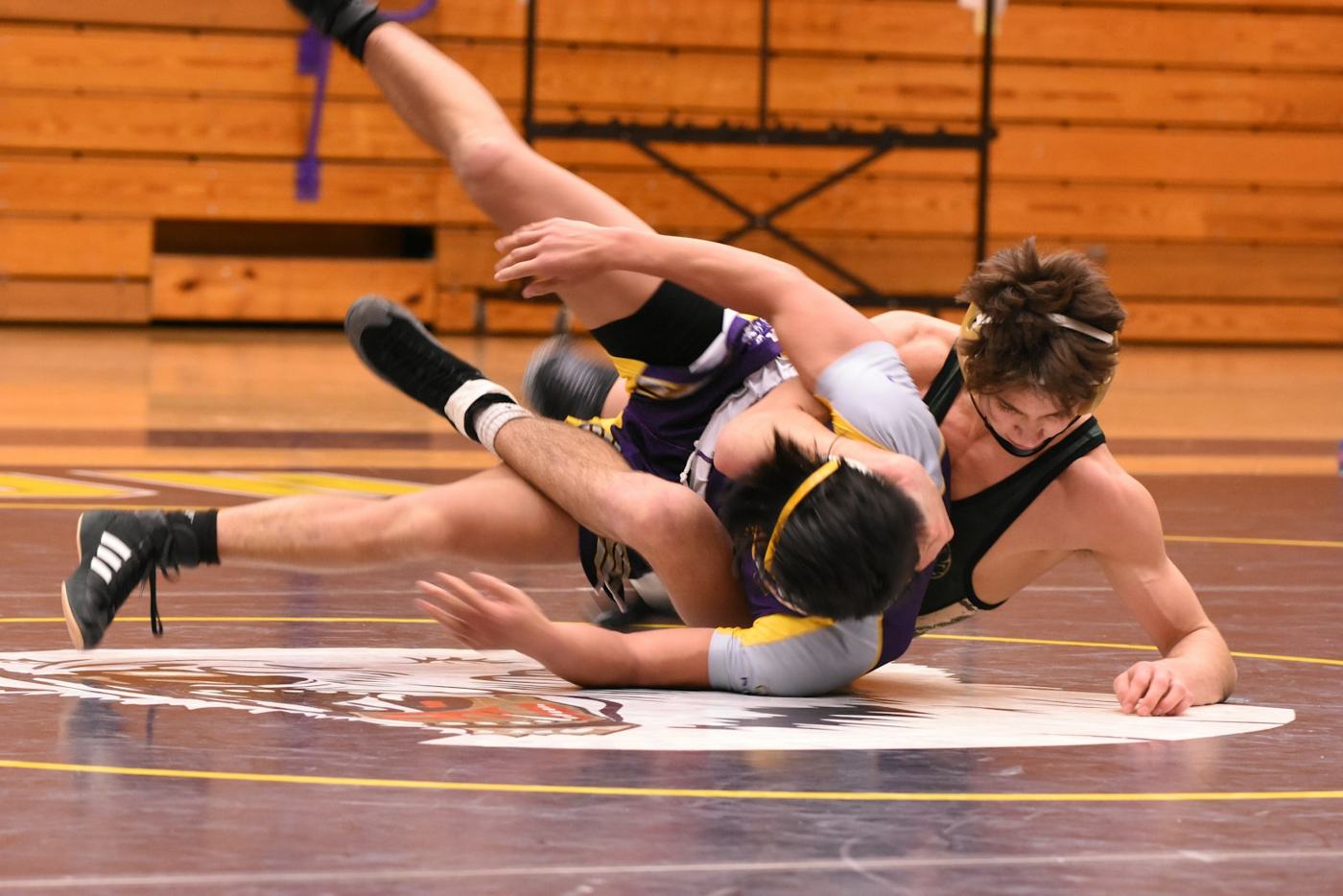
The best way to cut weight for wrestling is to start with your certified minimum weight, choose a realistic weight class, and lose weight gradually while eating enough to train. Keep drinking water, eat regular meals, and follow your school’s official weight descent plan. Do not try to make weight by skipping food or sweating out water at the last minute.
The goal is not to be as light as possible. It is to reach the scale healthy, keep your strength, and still have energy to wrestle hard.
How does wrestling weight certification work?
Before deciding how much weight to lose, find out how much you are allowed to lose.
High school wrestling uses a weight management system designed to keep athletes from dropping too much weight or choosing a class that is too low for their bodies.
Your starting point is the official weight assessment, sometimes called the alpha test. It establishes your hydrated starting weight, measures body composition, and helps determine your minimum wrestling weight.
The hydration test comes first
At the official assessment, your urine specific gravity must read 1.025 or lower before any body fat testing. If you fail, there is no more testing that day, and you wait before a retest: 48 hours in the GIAA handbook, with each state setting its own wait. GIAA
Schools record the assessment, your weigh-ins and your descent plan in the NWCA Optimal Performance Calculator (OPC) on TrackWrestling.
The test is meant to measure your body when you are normally hydrated.
Do not restrict water to get a lower number on the scale before assessment. That defeats the purpose of certification and may leave you unable to complete the test.
Read our wrestling hydration test guide to understand what happens at the assessment.
Body fat determines your minimum weight
For the 2026-27 season, NFHS keeps the boys’ minimum body fat floor at 7% and raises the girls’ floor from 12% to 19% under rules 1-5-1 and 1-5-2. NFHS
Your minimum wrestling weight is calculated using your fat-free weight and the applicable body fat floor.
Here is a calculation example for a boy:
| Measurement | Example |
|---|---|
| Assessment weight | 150 lb |
| Measured body fat | 12% |
| Fat-free weight | 132 lb |
| Boys’ body fat floor | 7% |
| Calculated minimum weight | About 141.9 lb |
This number is a lower limit used for certification. It is not a recommendation to lose every pound available.
The formula is simple: minimum weight equals fat-free weight divided by (1 minus the body fat floor). In the 2025-26 GIAA handbook, boys assessed at or below 7% and girls at or below 12% also needed medical clearance to wrestle. GIAA
Because the girls’ floor has changed, follow your current state association’s certification and medical clearance procedures rather than relying on an older handbook.
Rule check: Your calculated minimum weight and your approved weight class are not necessarily the same. A class must also fit your official descent schedule.
You can estimate your minimum with the weight certification calculator, but your school’s recorded assessment controls eligibility.
How do you choose the right wrestling weight class?
Choosing the lowest class you can reach is not always the best choice.
A good weight class lets you practice with energy, recover between sessions, and compete without constantly worrying about the scale.
Know your available classes
NFHS publishes the following boys’ and girls’ weight classes, while state associations may choose sets with 12, 13, or 14 classes. NFHS
| Division | Weight classes (lb) |
|---|---|
| Boys | 106, 113, 120, 126, 132, 138, 144, 150, 157, 165, 175, 190, 215, 285 |
| Girls | 100, 105, 110, 115, 120, 125, 130, 135, 140, 145, 155, 170, 190, 235 |
Check the wrestling weight classes by state before setting your goal.
Use the weight class finder to compare possible classes with your current weight.
Ask whether the lower class actually helps
Think about how you feel during normal training.
Can you finish a hard practice without feeling drained? Are you recovering well enough to train again? Can you eat regular meals without constantly fighting hunger?
If reaching the next class means you feel weak, distracted, or exhausted, that class may be too low.
A stronger wrestler in a higher class can be better prepared than a tired wrestler in a lower class.
Talk with your coach and a qualified sports health professional before making a major change.
Account for growth allowances
State associations set the dates and amounts for growth allowances, which add weight to the class limits later in the season. Check your state’s schedule in the weight class guide.
Do not assume the allowance is already available. Your state determines when it applies.
If you are still growing, your natural weight may also change during the season. That is another reason to avoid choosing a class based only on the lowest number you can reach.
Safety: Moving up a class is a reasonable choice when staying lower requires dehydration, missed meals, or a level of weight control that hurts your training.
How much weight can you lose per week for wrestling?
The weight descent plan gives you a gradual path from your certified starting weight toward an eligible class.
It is a ceiling on how quickly you may descend, not a target you must hit every week.
Your plan begins at the official assessment, not when you decide to start dieting.
Example: Starting at 152 lb
The table below shows a simple illustration of the maximum descent based on the weekly limit already explained.
| Point in plan | Illustrative maximum loss | Illustrative lowest weight |
|---|---|---|
| Initial assessment | 0 lb | 152.0 lb |
| Week 1 | 2.3 lb | 149.7 lb |
| Week 2 | 4.6 lb | 147.4 lb |
| Week 3 | 6.9 lb | 145.1 lb |
| Week 4 | 9.2 lb | 142.8 lb |
| Week 5 | 11.5 lb | 140.5 lb |
| Week 6 | 13.8 lb | 138.2 lb |
This table is a simplified illustration using a fixed weekly amount based on the starting weight. It is not an official eligibility schedule. Your actual OPC plan, certified minimum, and state rules determine when a class becomes available.
It also does not mean you should try to lose the full amount.
If you feel strong at a higher weight, there is no benefit in forcing the scale lower just because the schedule allows it.
Build the plan around competition
Start with your certification results and your planned weigh-in dates.
Then work backward:
- Check which classes you are eligible to reach.
- Mark your upcoming dual meets and tournaments.
- Pick a class that does not require last-minute weight loss.
- Plan meals around school, practice, and recovery.
- Review how your strength and energy change as the season progresses.
Your body weight will move around naturally with meals, fluids, and training. A heavier reading after dinner is not a reason to skip breakfast.
The best plan gives you room for normal daily changes without panic.
Use the descent plan calculator to explore your timeline, and read the wrestling descent plan guide for help understanding the schedule.
What should you eat while cutting weight for wrestling?
The best wrestling diet is not a crash diet.
You need food to build muscle, repair tissue, concentrate at school, and get through practice. Trying to train hard while constantly underfed works against your goal.
Focus on consistent meals made from familiar foods rather than extreme changes.
Build complete meals
A useful meal includes protein, carbohydrate-rich food, and fruits or vegetables.
For example:
- Breakfast: Eggs, oatmeal, and fruit.
- Lunch: A chicken or bean rice bowl with vegetables.
- Before practice: A banana, yogurt, or toast.
- Dinner: Fish, chicken, tofu, or beans with potatoes or rice and vegetables.
- After practice: A sandwich, yogurt with fruit, or another normal recovery meal.
These are examples, not a fixed meal plan. Your needs depend on your body, training load, health, and growth.
Eat protein throughout the day
Protein helps your muscles recover from training.
Include a protein source at each main meal instead of saving it all for dinner.
Eggs, poultry, fish, lean meat, dairy, tofu, and beans are practical options.
You do not need to rely on protein powders or special weight-cutting products to eat well.
Keep carbohydrates around practice
Carbs are fuel for wrestling.
Hard drilling, live wrestling, lifting, and conditioning all require energy. Cutting out rice, potatoes, bread, oats, and fruit can make practices feel much harder.
Eat carbohydrate-rich foods before training so you have energy available.
After practice, combine carbohydrates and protein to support recovery.
If you are consistently running out of energy, that is a reason to review your food intake and weight goal with a sports dietitian, not a reason to eat less.
Eat fruits and vegetables
Fruits and vegetables provide nutrients that support normal health and recovery.
Include them in meals and snacks throughout the day.
You do not need to replace every filling meal with salad. Keep a balance of foods that help you feel satisfied and train well.
Do not skip meals to make weight
Skipping breakfast or lunch may make the scale temporarily lighter, but it can also leave you hungry and tired during practice.
Instead, keep your meals consistent and adjust your overall eating pattern with help from a qualified professional.
Smaller, comfortable meals may suit your stomach before an event, but they should still provide enough fuel.
For younger wrestlers, weight changes deserve extra care because your body is still developing.
Safety: If you are constantly hungry, losing strength, feeling dizzy, or struggling to recover, stop trying to push your weight lower and speak with a parent, athletic trainer, or healthcare professional.
Should you drink less water to cut weight for wrestling?
No. Do not use dehydration as your weight-cutting strategy.
Water supports normal body temperature, circulation, muscle function, and concentration.
When you are dehydrated, practice can feel harder. You may become tired sooner and struggle to perform at your usual level.
The goal is to arrive at practice, assessment, and competition normally hydrated.
Drink throughout the day
Keep water available at school and practice.
Drink regularly with meals and respond to thirst. Replace fluids lost through ordinary training without trying to force the scale down.
If practice is long or especially sweaty, ask your athletic trainer about an appropriate fluid and electrolyte plan.
Avoid both deliberate dehydration and drinking excessive amounts all at once.
Why the hydration test matters
The hydration test is meant to make sure your starting weight reflects a normally hydrated body.
Someone who tries to manipulate their assessment weight by restricting fluids may fail the test and delay certification.
Passing the test is not a reason to start dehydrating afterward.
Treat hydration as part of your training plan, not an obstacle to getting into a weight class.
If your weight class only works when you drink too little, reconsider the class.
For more detail, see how the wrestling hydration test works.
What should you do during weigh-in week and weigh-in day?
The final stretch before a meet should be predictable.
You should already be close to your normal competition weight through gradual changes. The final days are not the time to make up for a plan that did not work.
During weigh-in week
Keep your normal eating pattern.
Choose familiar meals that sit well in your stomach. Eat regularly, including before and after training.
A practical routine includes:
- Checking your official eligibility and upcoming class.
- Eating regular meals with protein and carbohydrates.
- Keeping water intake normal.
- Sleeping enough to recover from training.
- Avoiding extra workouts done only to sweat off weight.
- Telling your coach early if the class no longer feels realistic.
You may prefer smaller, familiar meals near competition if large meals make you uncomfortable. Do not turn that preference into fasting or aggressive food restriction.
On weigh-in day
Wake up with enough time to follow your normal routine without rushing.
If you have time to eat before the weigh-in, choose familiar food that you tolerate well. Do not deliberately go without food or water to change the number on the scale.
Have food and fluids ready for afterward.
Check with your coach about the event’s official weigh-in procedure.
For 2026-27, NFHS also permits a team weigh-in option where practical, and byes no longer count toward the six-match daily or 10-match two-day event limits. NFHS
What does a week with two weigh-ins look like?
Imagine you have a midweek dual meet followed by a weekend tournament.
Before the dual: Follow your usual meal and hydration routine. If you are struggling to reach the class, tell your coach rather than trying an emergency cut.
After the dual: Eat a recovery meal, drink normally, and rest. Do not treat the time between meets as a chance to starve yourself.
Before the tournament: Continue eating consistently and check your eligibility for that event. Your goal is to feel recovered, not progressively weaker.
After the tournament: Return to normal meals and hydration.
This approach helps avoid the cycle of restricting food, making weight, overeating, and trying to cut again.
Rule check: An official descent plan does not make an unsafe last-minute cut acceptable. If you cannot reach the class while eating and drinking normally, speak with your coach about competing higher.
What should you eat and drink after a wrestling weigh-in?
After the scale, your attention should shift to fueling your match.
Eat foods that are familiar, easy to digest, and useful for recovery. Drink fluids steadily rather than trying to consume everything at once.
Replace fluids gradually
For fluid lost during activity, ACSM sports medicine guidance suggests approximately 1.25 to 1.5 liters of fluid for every kilogram (2.2 lb) of body weight lost, spread across the available recovery time and with sodium to help replace losses. ACSM
Here is a calculation example.
If an athlete has lost 4 lb of body weight through fluid loss during activity, that equals roughly 1.8 kg and corresponds to about 2.3 to 2.7 liters of fluid under this guidance. ACSM
This is a fluid replacement example, not a suggested amount of weight to cut before a weigh-in. It does not mean you should drink that amount immediately or use dehydration to make weight.
The appropriate recovery plan depends on your condition and the time available. If you are significantly dehydrated or feel ill, get medical help rather than trying to fix it by drinking large amounts quickly.
You can explore the calculation with the rehydration calculator.
Choose food that helps you wrestle
After weighing in, try familiar options such as:
- A turkey or chicken sandwich.
- A banana with yogurt.
- Rice with a simple protein source.
- Toast with eggs.
- Fruit and a snack you already know you tolerate.
Carbohydrates help restore available energy. Protein supports recovery. Fluids and sodium help replace sweat losses.
Avoid experimenting with unusual foods on competition day.
The closer your match is, the more useful it may be to choose a smaller, easy-to-digest meal. When there is more recovery time, a normal balanced meal may be comfortable.
Do not assume you can fully reverse severe dehydration or poor nutrition in the short time after a weigh-in.
What should you never do to cut weight for wrestling?
Rapid weight-cutting methods can make the scale move, but they do not create the same benefits as gradual, well-supported weight management.
Avoid these practices:
- Saunas and heated rooms: Using extreme heat to sweat out weight increases the risk of overheating and dehydration.
- Sweat suits, rubber suits, or plastic suits: Trapping heat to force water loss can be dangerous.
- Spitting to lose weight: This is deliberate fluid loss, not meaningful fat loss.
- Diuretics: Using medications to force fluid loss without a medical reason can disrupt normal fluid balance.
- Laxatives or vomiting: These can cause dehydration, illness, and serious health problems.
- Fasting or skipping meals: Your body needs steady fuel for practice, recovery, and growth.
- Restricting water: Deliberately dehydrating before assessment or competition undermines both safety and performance.
- Extra workouts just to sweat: More sweating does not mean better preparation for wrestling.
These methods go against the purpose of wrestling weight management rules.
Do not use them, even if teammates or online videos make them seem normal.
When should you stop trying to lose weight?
Pay attention to warning signs.
Persistent fatigue, dizziness, headaches, unusual weakness, trouble concentrating, or poor recovery can mean your current approach is not supporting your health.
Stop the cut and speak with your athletic trainer, parent, or healthcare professional.
If you experience fainting, confusion, or serious symptoms of heat illness, seek urgent medical care.
Your certified minimum is a limit, not an obligation. You can choose a higher class when that better supports your health and wrestling performance.
Is cutting weight different for college wrestling?
College wrestlers use a different certification standard, but the goal is similar: prevent unsafe weight loss and establish an appropriate competition weight.
Under the NCAA wrestling weight management program, the minimum body fat floor is 5%, the hydration test requires urine specific gravity of 1.020 or lower, a failed hydration test requires waiting at least 24 hours before retesting, and weekly weight loss is limited to 1.5% of body weight. NCAA
These college standards should not be applied to high school athletes.
College wrestlers should work with their team’s athletic training and medical staff to confirm their current certification and competition requirements.
The same practical advice still applies: choose a sustainable class, keep eating enough to train, stay hydrated, and avoid emergency cuts.
How can CutCoach help you make weight?
CutCoach builds a day by day plan for calories, water, meals, and refueling after the scale based on your weight, weight class, and weigh-in date.
The app is available on iPhone and Android and is rated 4.8 from more than 1,600 App Store ratings.
Use the plan alongside your official certification, your school’s descent schedule, and guidance from your coach and healthcare team.
The best wrestling weight is not the lowest number you can reach. It is a weight you can maintain safely while showing up strong, fueled, and ready to compete.