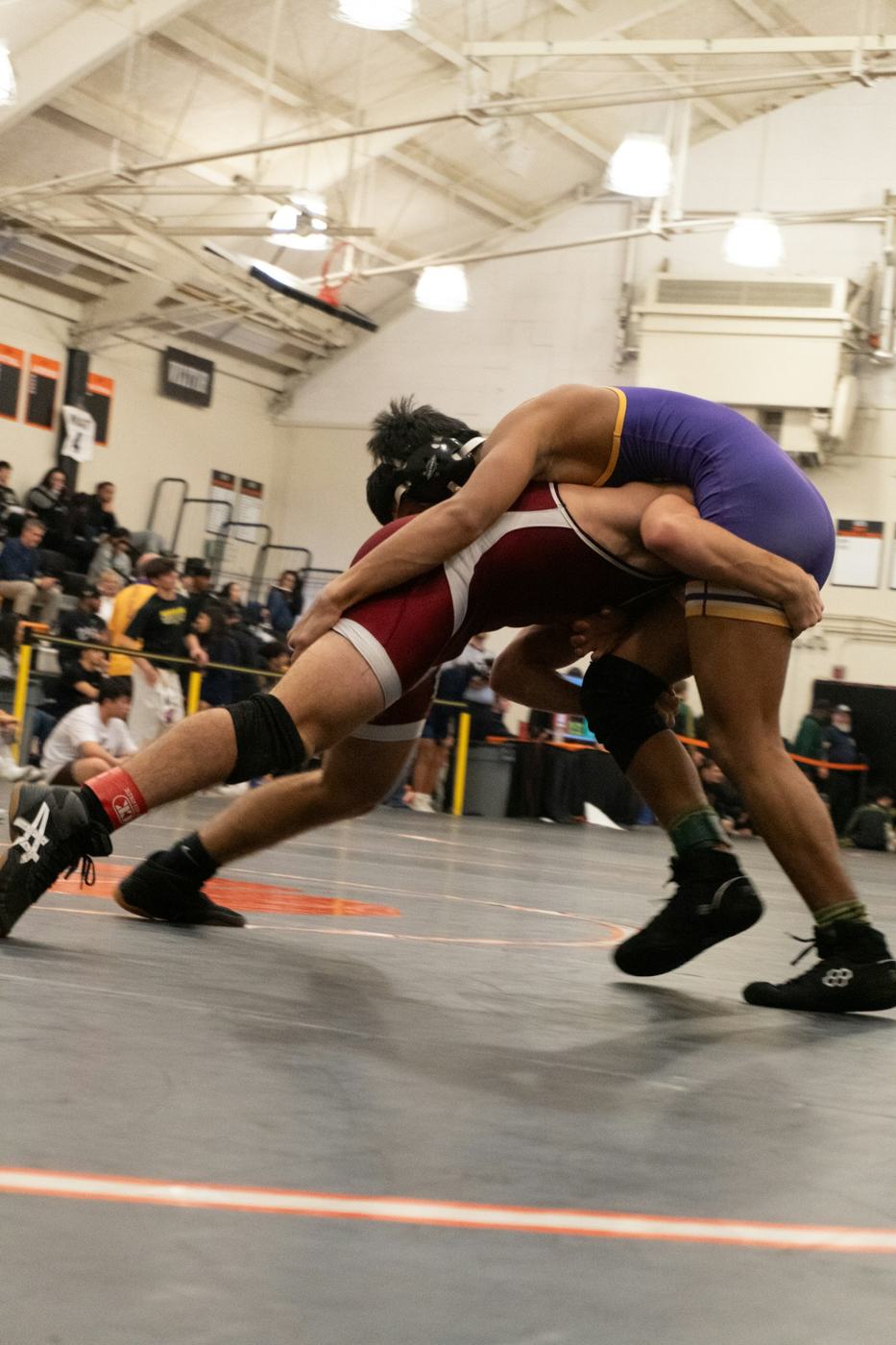
The wrestling body fat test helps set your minimum wrestling weight for the season. It is part of a preseason assessment that checks your hydration and body composition before you choose a weight class. The goal is to find a weight you can compete at without putting your health at risk. NFHS
What does the wrestling body fat test decide?
The body fat test helps determine the lowest weight you should consider for competition. It does not tell you how much weight you need to lose or which weight class will make you a better wrestler.
Your body is made up of fat mass and fat-free mass. Fat-free mass includes muscle, bone, water, and other tissues. The assessment uses your measured body fat percentage to estimate how much of your current weight comes from fat-free mass.
That estimate matters because losing weight is not the same as losing body fat. When you try to get lighter too quickly, you can lose water and muscle along with fat.
Your minimum wrestling weight is a limit, not a goal.
You might be comfortable competing well above that number. You might also find that staying in your current class lets you train harder, recover better, and feel stronger during matches.
Before choosing a lower class, ask yourself:
- Can I train normally while maintaining this weight?
- Am I eating enough to support practice and recovery?
- Do I feel strong during live wrestling?
- Can I reach this weight without dehydration or skipping meals?
- Would staying in a higher class make the season easier to manage?
If the lower class would require constant hunger, exhaustion, or last-minute weight cuts, it may not be the right class for you.
The hydration test comes before the body fat test
The wrestling body fat assessment starts with a hydration check. You give a urine sample, and the assessor measures its specific gravity.
Specific gravity describes how concentrated your urine is. More concentrated urine can indicate that you are not adequately hydrated.
Under the GIAA high school assessment procedure, your urine specific gravity must be 1.025 or lower; if you fail, body fat testing stops for that day and you must wait at least 48 hours before retesting, although each state sets its own waiting period. GIAA
College wrestling uses a different hydration standard. The NCAA requires a urine specific gravity of 1.020 or lower, with a failed test requiring a wait of at least 24 hours before another attempt. NCAA
The purpose is to assess your body at a normal level of hydration. If you arrive dehydrated, the assessment may not reflect your normal condition.
Safety: Never restrict water before a hydration test or weigh-in. Do not try to manipulate your urine reading by dehydrating yourself or drinking extreme amounts of water.
Instead, drink normally in the days leading up to your appointment. Eat your usual meals and follow your school’s instructions.
If your sample does not pass, ask the assessor when you can return. A failed hydration result is not a reason to panic or attempt a quick fix.
You can use the wrestling hydration test calculator to understand a specific gravity reading before your assessment.
What body fat percentage is required for wrestling?
Minimum body fat standards depend on whether you wrestle in high school or college.
| Wrestler group | Body fat floor | Source |
|---|---|---|
| High school boys | 7% | NFHS |
| High school girls | 19% starting in 2026-27, raised from 12% | NFHS |
| College (NCAA) | 5% | NCAA |
A body fat floor is used to calculate a minimum weight. It is not a recommended body fat target.
For example, a wrestler with a relatively high body fat percentage may have room to lose some fat over time. A wrestler who is already very lean may have little reason to try losing more weight.
Neither wrestler should assume that reaching the lowest permitted number will improve performance.
The change for girls is especially worth checking if you wrestled under an older certification system. Ask your athletic trainer or school assessor which standard applies to your current season.
If you are a female high school wrestler, read our girls wrestling weight cutting guide for more on choosing a class and managing your weight safely.
How is minimum wrestling weight calculated?
Your minimum wrestling weight starts with an estimate of your fat-free weight.
The calculation works like this:
Minimum wrestling weight = fat-free weight ÷ (1 minus the body fat floor)
Fat-free weight is your current body weight after subtracting the estimated weight of your body fat.
Worked example: A high school boy
Here is what the calculation looks like for a wrestler who weighs 150 lb at his initial assessment.
| Measurement | Result |
|---|---|
| Body weight | 150 lb |
| Measured body fat | 12% |
| Fat-free weight | 132 lb |
| Boys’ body fat floor | 7% |
| Calculation | 132 ÷ (1 minus 7%) |
| Estimated minimum wrestling weight | 141.9 lb |
This calculation gives an estimated lower boundary for weight certification.
It does not mean the wrestler should immediately attempt to reach that weight.
The GIAA weight-management program uses the fat-free-weight calculation, limits high school weight loss to 1.5% of body weight per week starting from the initial assessment, and records assessments and weigh-ins through the NWCA Optimal Performance Calculator on TrackWrestling. GIAA
The timing of weight loss matters alongside the minimum itself. Even when a lower class is within your calculated range, your descent plan may not allow you to reach it by your next competition.
You can estimate your number with the wrestling weight certification calculator.
Enter your assessment weight, measured body fat percentage, and the appropriate wrestler group. The calculator helps explain the math and identify a possible lowest class.
Treat the result as an estimate. Your school’s official assessment and certification process determines your eligibility.
How is the wrestling body fat test done?
You may hear the assessment called the alpha test, wrestling skinfold test, body fat certification, or minimum weight assessment.
These terms are often used in conversations about the same weight-management process, although the method used to measure body composition can vary.
A skinfold assessment uses measurements taken from the body to estimate body fat. Your school may use an approved assessment method other than skinfold measurements.
Ask your assessor which method will be used rather than assuming every school follows an identical procedure.
What happens during the appointment?
You can generally expect the process to involve:
- Confirming your assessment information.
- Completing the required hydration check.
- Recording your hydrated body weight.
- Having your body composition assessed.
- Reviewing the results with the appropriate school personnel.
You do not need to calculate your minimum weight by hand at the appointment.
If you have questions about the measurements, ask the person conducting the assessment. You should understand what your result means before making decisions about a lower weight class.
The NFHS recommends preseason hydration testing, body fat assessment, and a monitored descent plan involving the wrestler, parents or guardians, an appropriate health-care professional, and the coach; it also recommends having someone other than the coach, such as an athletic trainer or school nurse, monitor weight when possible. NFHS
Your parent or guardian can help you ask questions, especially if the result would mean a major change in your eating or training routine.
If your body fat measurement seems unusually low or you are concerned about your health, discuss it with the school athletic trainer or an appropriate health-care professional. Ask about any medical clearance requirements before competing.
What does your minimum weight mean for the season?
Your minimum wrestling weight and your weight descent plan answer different questions.
Minimum weight: How low does your body composition assessment suggest you can safely be considered for certification?
Descent plan: How gradually should you move toward a lower weight during the season?
Both matter when choosing a weight class.
Imagine you have completed your assessment and are considering moving down from your current division. You may find that the lower class is above your minimum wrestling weight.
That does not automatically make it the best choice.
You still need enough time to make any planned weight change, and you need to maintain your strength and energy during practice.
How to choose a realistic class
Start with your current weight rather than the weight you wish you had.
Then look at your training schedule, competition calendar, and how you feel at your usual body weight.
Discuss these questions with your coach and athletic trainer:
- Is the lower class within my certification range?
- Does my descent plan allow enough time?
- Can I make this change while eating regular meals?
- Will my training quality suffer?
- Would competing in the higher class be a better option?
A lower weight class is not automatically an advantage. Strength, conditioning, technique, and recovery all matter.
If you are growing, constantly hungry, or struggling to recover after practice, that is a good reason to reconsider the goal with a health-care professional.
Use the wrestling descent plan calculator to explore how a gradual weight change fits your assessment date and target class.
The useful question is not simply, “What is the lowest weight I can wrestle?”
It is, “What weight class can I compete in while staying healthy, strong, and consistent throughout the season?”
How to prepare for wrestling body fat test day
The best preparation is to arrive in your normal, healthy condition.
Do not treat the assessment like a competition weigh-in. You are not trying to show the lowest possible weight on the scale.
The days before testing
Keep your routine simple:
- Eat normal, balanced meals.
- Drink water regularly.
- Get adequate sleep.
- Avoid unusual changes to your training.
- Follow your school’s instructions about the appointment.
- Tell your assessor if you have been sick or have trouble staying hydrated.
You do not need an aggressive diet to prepare for a body fat assessment.
Your goal is an accurate result that can guide sensible decisions for the season.
What not to do
Safety: Do not use saunas, sweat suits, rubber or plastic suits, spitting, diuretics, laxatives, vomiting, fasting, or water restriction to change your test result. These methods can be dangerous and go against the purpose of wrestling weight-management rules.
Trying to force a lower number can also distract you from the real goal: performing well on the mat.
The American College of Sports Medicine’s expert consensus on weight-category sports supports setting minimum competition weights through preseason body composition assessment, reducing the time between weigh-in and competition, and banning unhealthy weight-loss methods. ACSM
The assessment should help protect your health, not encourage you to take risks.
If you feel pressured to lose weight rapidly or change your eating and drinking in unsafe ways, speak with a parent, athletic trainer, or health-care professional.
What should you do after your wrestling body fat test?
Once you receive your assessment result, use it to make a practical plan for the season.
Start by checking that you understand your certified minimum weight and the weight class you are considering.
Then talk with the people supporting your training.
A useful next-step checklist is:
- Review your assessment result with your athletic trainer or assessor.
- Confirm the rules that apply to your school and season.
- Compare your preferred class with your minimum weight.
- Check your official weight descent plan.
- Choose meals that support practice and recovery.
- Watch for fatigue, poor recovery, or unhealthy pressure around weight.
- Reconsider your target class if maintaining it becomes difficult.
You do not need to pursue the lowest possible weight to be a successful wrestler.
If you want help organizing everyday meals and weigh-in preparation, CutCoach is available on iPhone and Android. It builds a day by day plan covering calories, water, meals, and refueling after the scale using your weight, weight class, and weigh-in date.
For younger wrestlers, parents should be involved in decisions about weight management. Our parents’ guide to wrestling weight cutting explains how families can approach those conversations.
The most useful body fat test result is not necessarily the lowest number.
It is the information that helps you choose a weight class where you can train hard, recover well, and wrestle at your best.