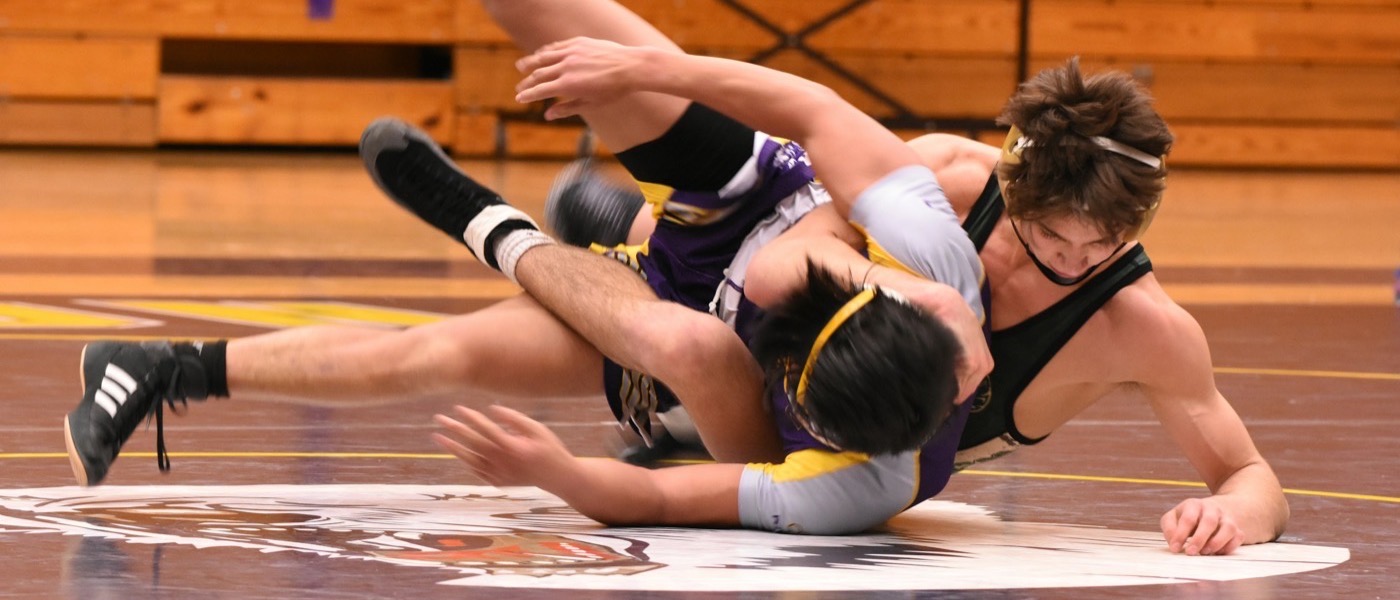
Yes, you can cut weight for wrestling without losing muscle if you lose weight slowly, eat enough protein and carbs, and keep lifting. The biggest threat to your muscle is a rushed cut on too little food. A study of elite adult athletes found that slower weight loss produced better lean mass results than faster weight loss while both groups kept strength training. Garthe et al. A study of high school wrestlers also found that low food intake during the season went along with lower strength and slower muscle growth. Roemmich and Sinning
Can you cut weight without losing muscle?
The scale tells you how much you weigh, but not how much muscle you are keeping. Watch your normal lifts, your strength late in matches, and how well you recover between practices. If your weight is dropping but your performance keeps getting worse, your cut is too aggressive. The goal is not just to reach a lower class. It is to arrive strong enough to wrestle well.
What happens to muscle during wrestling season?
Wrestling puts a heavy demand on your muscles. Between drilling, live wrestling, lifting, and competition, your body needs enough food to recover and keep its strength. When you cut food too hard, the scale may move in the right direction while your performance slides.
Researchers followed high school wrestlers through a season and found that they ate about 24.7 kcal/kg/day and 0.9 g/kg/day of protein, while their average weight fell from 60.3 to 58.0 kg and body fat dropped from 9.9% to 8.0%; after the season, they gained 6.1 kg, including 3.0 kg of fat-free mass. Roemmich and Sinning
During the season, growth in their arm and thigh muscle size slowed, and their elbow and knee strength declined. Strength came back after the season, and changes in lean tissue closely tracked changes in strength and power. Their height growth and maturation were no different from the active non-wrestlers in the comparison group.
That study does not prove that every strength change came from eating too little. But it shows why losing weight without enough fuel is a problem, especially while you are still growing.
Fast cuts also hurt you during competition. In another study, Division I college wrestlers lost 6% of their body weight in the week before a simulated 2-day tournament, and their upper-body strength and lower-body power kept falling as the matches went on. Kraemer et al.
How fast should you lose weight to keep muscle?
24 elite adult athletes, all lifting 4 times a week (Garthe and others, 2011). Both groups lost about the same weight. Only the slow group added lean mass. Teen wrestlers were not in this study.
In a study of elite adult athletes, the slow group took 8.5 weeks, cut food intake by 19%, and gained 2.1% lean body mass, while the fast group took 5.3 weeks, cut food intake by 30%, and kept lean body mass about the same (-0.2%); both groups lost about 5.5% of their body weight and kept 4 strength sessions per week. Garthe et al.
These were adults, not high school wrestlers. Lean body mass also includes more than muscle, so those numbers are not an exact measure of muscle growth. Still, the results support giving your body more time to lose weight while you keep training.
| Weight class | 0.7% a week (the slow pace that kept muscle in the study) | 1.5% a week (NFHS maximum) |
|---|---|---|
| 106 lb | 0.7 lb | 1.6 lb |
| 120 lb | 0.8 lb | 1.8 lb |
| 132 lb | 0.9 lb | 2.0 lb |
| 144 lb | 1.0 lb | 2.2 lb |
| 157 lb | 1.1 lb | 2.4 lb |
| 175 lb | 1.2 lb | 2.6 lb |
| 190 lb | 1.3 lb | 2.9 lb |
| 215 lb | 1.5 lb | 3.2 lb |
Weekly loss if you weigh exactly the class weight. Your real number is a percent of your own weight. The 1.5% figure is a legal limit, not a target.
Rule check: NFHS weight management rules limit the season-long weight loss plan to a maximum of 1.5% of body weight per week from the initial assessment; for a 144 lb wrestler, that is about 2.2 lb per week, compared with about 1.0 lb at a slower 0.7% pace. GIAA Weight Management Handbook
That maximum is a legal ceiling, not a weight loss goal. Your body may need a slower pace to keep strength, recover, and keep growing.
The American Academy of Pediatrics recommends no more than 1 lb per week for a growing athlete with excess body fat and up to 2 lb per week for a mature athlete; losing more than 2 lb per week is considered unhealthy. AAP
Start planning your descent early in the season. The more weeks you have, the less pressure there is to cut food or water when an important weigh-in gets close. If your target class needs an unsafe pace, talk with your coach about staying at a higher class.
How much protein do wrestlers need when cutting?
| Your weight | Protein per day (1.2 to 2.0 g per kg) | Per meal (about 0.25 g per kg, every 3 to 4 hours) |
|---|---|---|
| 106 lb (48 kg) | 58 to 96 g | about 12 g |
| 120 lb (54 kg) | 65 to 109 g | about 14 g |
| 132 lb (60 kg) | 72 to 120 g | about 15 g |
| 144 lb (65 kg) | 78 to 131 g | about 16 g |
| 157 lb (71 kg) | 85 to 142 g | about 18 g |
| 175 lb (79 kg) | 95 to 159 g | about 20 g |
| 190 lb (86 kg) | 103 to 172 g | about 22 g |
| 215 lb (98 kg) | 117 to 195 g | about 24 g |
1.2 to 2.0 g/kg is the floor the 2025 ISSN combat sports position stand sets for protein during weight descent. The per-meal amount follows the ISSN protein position stand (0.25 g/kg every 3 to 4 hours).
Protein helps repair and maintain muscle after wrestling practice and lifting. When you are losing weight, enough protein matters even more because your body has less energy coming in.
The table uses 1.2 to 2.0 g/kg of protein per day, the range the ISSN combat sports position stand gives as the floor during weight descent. ISSN combat sports
For growing athletes, the AAP describes a healthy diet with about 0.85 to 1.7 g/kg/day of protein, along with enough total food to support growth and training, so teenagers do not need to chase the highest number in the table. AAP
Some adult lifters use 2.3 to 3.1 g/kg/day during calorie restriction to hold on to lean mass, but that higher range is not a target for teenage wrestlers. ISSN protein
Spread protein across your meals
Do not save all your protein for dinner. Sports nutrition guidance notes that protein spread over the day during energy restriction may help preserve fat-free mass. Sports nutrition position
The table uses about 0.25 g/kg per meal, which works out to less than 20 g for wrestlers in lighter classes. ISSN protein You do not have to measure every serving. A normal portion of a protein food at each meal, plus a protein snack when you need one, covers it.
Easy options:
- Eggs and milk with breakfast.
- Greek yogurt between school and practice.
- Chicken or fish with lunch or dinner.
- Beans as part of a regular meal.
- A meal with protein and carbs after practice.
Protein powder is not required. Regular food can cover what you need, and a sports dietitian can help you find the right intake if you are still growing.
Should you cut carbs to lose weight for wrestling?
Do not cut carbs to zero. Carbs fuel hard practices, repeated shots, scrambles, and the work you do in the weight room. If you train on empty day after day, it gets harder to practice well and recover.
The ISSN combat sports position stand advises that carbohydrate intake during weight descent should not fall below about 3.0 to 4.0 g/kg/day and explains that athletes with same-day weigh-ins should rely more on gradual body fat loss and lean mass management than on acute water loss. ISSN combat sports
Carb needs also depend on how much you train. General sports nutrition guidance lists 6 to 10 g/kg/day for athletes training 1 to 3 hours a day at moderate to high intensity. Sports nutrition position These are general ranges, not a reason to count every gram. The practical goal is to eat enough for the work you are doing.
Build your meals around familiar foods:
- Oatmeal, toast, or fruit at breakfast.
- Rice, pasta, or potatoes with meals.
- Fruit or another easy-to-digest carb before practice.
- A meal with carbs and protein after training.
A wrestler running on empty trains at a lower intensity and has a harder time keeping muscle. Aim for gradual fat loss with fueled practices, rather than making the scale move by cutting out a whole food group.
Should you keep lifting while cutting weight?
Yes. Keep strength training during the season instead of dropping it to save energy. Lifting gives your muscles a reason to stay while your weight comes down. The adult athletes in the slower weight loss study kept strength training in their programs the whole time, which is a big part of why their results matter.
Work with your coach to keep at least 2 short, challenging lifting sessions each week when your practice schedule and recovery allow. Use the strength exercises already in your program rather than adding extra workouts to burn calories.
A good in-season approach:
- Keep lifts challenging enough to hold your strength.
- Use controlled movements and good technique.
- Skip extra conditioning added only to speed up weight loss.
- Adjust training when fatigue starts affecting practice.
- Tell your coach if weights that usually feel manageable get harder every week.
How does sleep affect muscle recovery?
You can eat enough protein and keep lifting and still struggle if you are not recovering between sessions. Wrestling season often means early classes, hard practices, homework, and travel for meets, so sleep is the first thing to get squeezed.
The American Academy of Sleep Medicine recommends 8 to 10 hours of sleep per day for teenagers ages 13 to 18. AASM
A review of combat sports research found that rapid weight loss consistently impairs recovery, increases muscle damage and fatigue, and raises injury risk. Rapid weight loss review
Pay attention when soreness lasts longer than usual, normal workouts feel harder, or you are tired before practice even starts. If that is your whole week, do not add more conditioning or cut more food. Talk with your coach and a parent about whether your weight class and schedule are realistic.
What is your minimum wrestling weight, and when should you move up?
Your certified minimum weight and your best competitive weight are not always the same.
Under NFHS rules, the minimum weight is calculated at a 7% body fat floor for boys, and the girls’ floor rose from 12% to 19% starting in the 2026-27 season; the standard certification does not allow a minimum weight below the floor. NFHS rules update
The minimum weight formula divides fat-free weight by one minus the body fat floor; for a boy weighing 150 lb at 12% body fat, the calculated minimum is about 141.9 lb at the 7% floor. GIAA Weight Management Handbook
That number is a boundary, not a target. It does not mean you should try to reach the lowest class allowed, especially if getting there leaves you weak or unable to recover.
Signs your cut may be hurting your strength
| What you notice | What to do |
|---|---|
| Your normal lifts keep getting weaker | Review food intake and recovery with your coach |
| You get pushed around late in matches | Check whether fatigue is affecting your strength |
| You feel tired throughout the day | Discuss sleep, fueling, and the cut with a parent |
| You struggle to finish normal practices | Reduce the pressure to lose weight and reassess |
| You need a rushed cut to reach the class | Discuss wrestling in the class above |
These are warning signs, not proof that you have lost muscle. A bad practice or match can happen for many reasons. What matters is whether your strength and energy keep sliding as your weight drops.
If keeping your strength means you would need to lose weight faster than a slow, steady pace allows, your target class is too low for now. Talk with your coach about moving up rather than forcing the cut.
What does a week of muscle-friendly cutting look like?
Protecting muscle does not take a complicated routine. You need a steady plan that supports your training while you move toward the right class. Use this checklist with your coach:
- Weigh yourself the same way. Each morning, after using the bathroom and before eating. Watch the weekly trend, not a single reading.
- Aim for a slow pace. Follow your descent plan rather than losing as fast as the rules allow.
- Eat protein at each meal. Eggs, milk, yogurt, chicken, fish, or beans spread across the day.
- Keep carbs around practice. Eat enough before training and have a proper meal afterward.
- Keep lifting. At least 2 coached strength sessions when your schedule and recovery allow.
- Get enough sleep. Treat recovery as part of the plan, especially after hard practices.
- Track your strength. Notice whether your lifts, energy, and late-match strength stay steady as your weight changes.
Safety: Never use saunas, sweat suits, rubber or plastic suits, spitting, diuretics, laxatives, vomiting, fasting, or water restriction to make weight. These methods are dangerous, and restricting water before a hydration test or weigh-in goes against the purpose of safe weight management. If you feel dizzy, faint, or unusually weak, stop the cut and get help.
Before choosing a lower class, use the descent plan calculator to see the pace it takes and the weight certification calculator to check your minimum weight. For the full process, read how to cut weight for wrestling.
The CutCoach app builds a day by day plan from your current weight, weight class, and weigh-in date, including calories, water, meals, and the refuel after the scale. Use it alongside guidance from your coach and a qualified sports health professional.