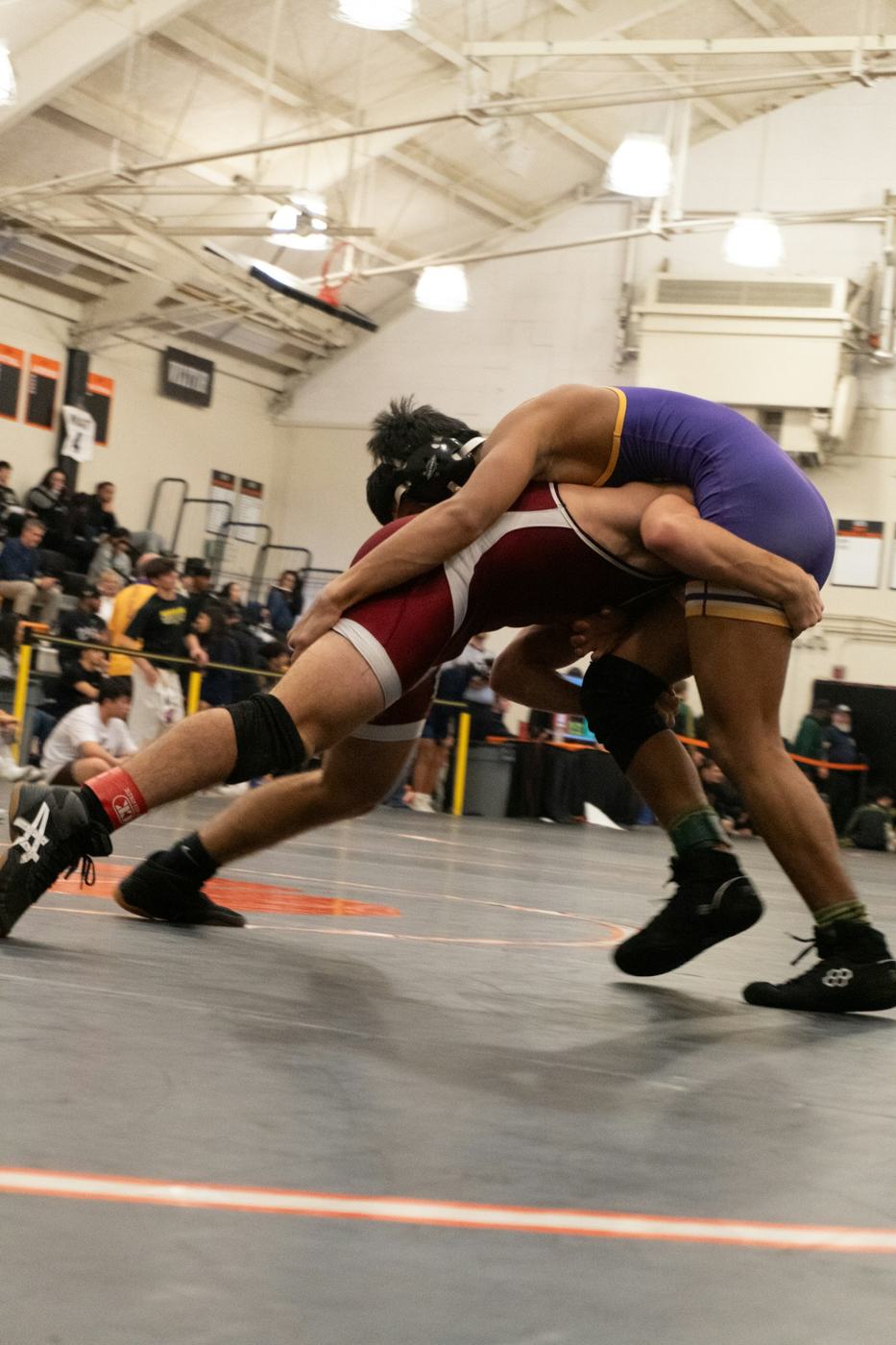
No, losing 10 pounds in a week for wrestling is not a safe or rule-compliant plan for high school wrestlers. High school weight management rules limit planned weight loss to 1.5% of body weight per week, and college wrestling uses the same weekly limit. NFHS NCAA
If your weigh-in is coming up and you are well above your target, the safer choice is to reconsider your weight class rather than force a rapid cut. You can still compete hard without putting your health at risk.
Can you lose 10 pounds in a week for wrestling?
Your scale weight can drop quickly if you lose water, but that does not mean you have safely lost body fat. It also does not mean you can maintain that lower weight while training and competing.
Wrestling makes this tempting. You might have a specific class in mind, a teammate competing at your natural weight, or pressure to make the lineup. When the weigh-in gets close, cutting harder can seem like the only option.
But there is a difference between making weight and being ready to wrestle.
Your body needs enough food and fluid to train, recover, think clearly, and compete. When you try to force a large drop in a short time, you risk taking away the things that help you perform.
Rule check: Your wrestling weight management plan is based on your initial assessment and a season-long descent schedule. A last-minute weigh-in deadline does not override that schedule.
The right question is not how much weight you can force off the scale. It is which weight class you can reach while staying healthy, hydrated, and strong enough to wrestle.
If your target is out of reach under your approved plan, moving up a class is a reasonable decision. Competing at a higher weight while properly fueled may give you a better chance than arriving at a lower weight exhausted.
How long does losing 10 pounds really take for wrestling?
The time depends on your starting weight. A heavier wrestler has a larger weekly allowance under a percentage-based rule, but that does not mean everyone should lose weight at the maximum permitted rate.
Here is what the high school weekly limit means at different starting weights.
| Starting weight | Maximum weekly loss | Approximate time for 10 lb |
|---|---|---|
| 120 lb | 1.8 lb | About 6 weeks |
| 150 lb | 2.25 lb | About 5 weeks |
| 175 lb | About 2.6 lb | About 4 weeks |
| 215 lb | About 3.2 lb | At least 3 weeks |
These are planning estimates, not promised results. Your certified minimum weight, current body composition, and approved descent schedule still determine what is allowed.
Actual weight changes are not perfectly steady. Your scale may move differently from day to day because of food, fluid, and normal changes during training.
Do not respond to a slower weigh-in by skipping meals or trying to sweat off the difference. A slower change does not mean your plan is failing.
Use the wrestling descent plan calculator to see how your permitted weight changes across the season.
If the calculator shows that your target class is not reachable by your weigh-in date, treat that as useful information. You have time to talk with your coach about another class rather than turning the final days into an emergency.
What happened when wrestlers tried rapid weight loss?
The risks of extreme wrestling weight cuts are not hypothetical.
A CDC report published in 1998 described three previously healthy college wrestlers who died in North Carolina, Wisconsin, and Michigan between November 7 and December 9, 1997, while attempting rapid weight loss for competition. CDC
The report documented what happened in each case:
- North Carolina, age 19: Lost about 9 lb in roughly 12 hours after already losing about 23 lb over the previous 10 weeks
- Wisconsin, age 22: Died from hyperthermia after a roughly 4-hour exercise session, with a recorded rectal temperature of 108°F (42°C)
- Michigan, age 21: Died with rhabdomyolysis listed as the cause after about 3 hours of additional weight-loss exercise following practice
All of the athletes had restricted food and fluids, worn vapor-impermeable suits under cotton warm-ups, and exercised vigorously in hot conditions; these were the first deaths associated with intentional rapid weight loss in high school or college wrestling since national record keeping began in 1982, their preseason-to-goal weight gap averaged about 15% of body weight, and the CDC warned that safe limits for weight loss involving dehydration had not been established and that intentional dehydration should be prohibited. CDC
These athletes were trying to compete in the sport they trained for. Their deaths led to greater attention to dangerous weight-cutting practices in wrestling.
The lesson is not that every weight cut leads to the same outcome. It is that rapid dehydration combined with intense exercise can become dangerous.
Safety: Do not use saunas, plastic or rubber suits, sweat suits, fasting, vomiting, laxatives, diuretics, or deliberate water restriction to make weight. These practices can put your health at risk and undermine the purpose of wrestling weight management rules.
If you feel dizzy, faint, confused, unusually weak, or overheated while trying to make weight, stop exercising and get medical help. Tell your coach, athletic trainer, or parent what is happening. Do not hide symptoms to protect your place in the lineup.
What do doctors and athletic trainers say about rapid weight loss?
Sports medicine organizations focus on gradual weight management rather than extreme cuts right before competition.
The National Athletic Trainers’ Association recommends measuring body weight while hydrated and limiting weight loss to no more than 1.5% of body weight per week. NATA
It also describes a goal of roughly 1 to 2 lb of weight loss per week and advises athletes in weight-class sports to avoid large swings in body weight during training. NATA
The American Academy of Pediatrics describes losing more than 2 lb per week as unhealthy, recommends no more than 1 lb per week for growing athletes with excess body fat and up to 2 lb per week for mature athletes, and advises beginning gradual weight management early enough before the season to maintain a stable weight once the goal is reached, with a registered dietitian involved when available. AAP
That guidance matters especially when you are still growing. Your body needs energy for school, normal development, practice, strength training, and recovery.
Dehydration can also affect how well you wrestle, not just how you feel.
A joint sports nutrition position statement reports that fluid deficits above 2% of body weight can impair thinking and aerobic performance, while losses of 3% to 5% more often impair high-intensity exercise and sport-specific skills. Sports Nutrition Position Statement
Wrestling requires quick decisions, balance, grip strength, positioning, and repeated hard efforts. You need to be able to execute your technique while tired.
A lower number on the scale does not help if you cannot wrestle the way you normally do.
Does losing weight slowly help you keep more strength?
A slower plan gives you more room to eat enough, recover between practices, and maintain the strength you worked to build.
The American Academy of Pediatrics cites research in which athletes losing 0.7% of body weight per week gained more lean mass and strength than athletes losing 1.4% per week. AAP
A joint sports nutrition position statement also notes that keeping weekly weight loss below 1% of body weight may better preserve fat-free mass and performance. Sports Nutrition Position Statement
This is why the fastest permitted descent is not always the best descent.
If you are trying to maintain strength while gradually changing weight, pay attention to whether you can still finish practice, recover, sleep well, and perform your normal training.
Your meals matter too.
The International Society of Sports Nutrition’s combat sports position stand gives minimum recommended macronutrient ranges during weight descent of 3.0 to 4.0 g/kg carbohydrate, 1.2 to 2.0 g/kg protein, and 0.5 to 1.0 g/kg/day fat. ISSN
These are sports nutrition guidelines, not a reason to calculate your own extreme diet. Your needs depend on your training, growth, and health. A sports dietitian can help you determine whether weight loss is appropriate and how to fuel it.
Eating too little can make training feel harder and recovery more difficult. A good weight management plan should support your wrestling, not fight against it.
Your certified minimum weight sets the floor
Before trying to reach a lighter division, find out your minimum wrestling weight.
High school weight certification uses your hydrated assessment weight and estimated body composition to determine how low you may safely compete under the applicable rules.
The standard calculation divides your fat-free weight by one minus the permitted body-fat floor; for example, a boy weighing 150 lb at 12% body fat has 132 lb of fat-free mass and a calculated minimum of about 141.9 lb using the 7% boys floor. GIAA
That minimum matters even if you believe you could physically reach a lower number.
College wrestlers have their own assessment requirements: the NCAA uses a 5% body-fat floor, requires a hydration reading of 1.020 or lower, and requires athletes who fail hydration testing to return no earlier than 24 hours later. NCAA
Your minimum weight and your descent schedule work together. Being above your minimum does not automatically mean you can lose the remaining weight before your next match.
Use the wrestling weight certification calculator to estimate your minimum from your assessment information.
Then confirm the official result with your coach or athletic trainer. An online estimate cannot replace your actual certification.
What is a better plan than trying to lose 10 pounds in a week?
The best alternative is to build your season around a weight you can maintain while practicing and competing well.
Start with these steps.
Choose a realistic weight class
Look at your current hydrated weight, certified minimum, and upcoming schedule.
Ask whether your target class makes sense for your body right now. Do not choose a division simply because you wrestled there before or because the team needs someone in that spot.
Talk with your coach about where you can compete without extreme dieting or dehydration.
Start planning early
Do not leave your weight decision until the final days before competition.
When weight management is appropriate, gradual changes give you more time to adjust your eating habits, assess your performance, and make changes with professional guidance.
If a target is not realistic this season, that is a reason to change the target, not to become more aggressive.
Eat regular meals
Build meals around foods that support training:
- Protein: Eggs, chicken, fish, beans, yogurt, or other protein sources
- Carbohydrates: Rice, potatoes, oats, pasta, fruit, and other foods that fuel practice
- Vegetables and fruit: Include a variety across your meals
- Dietary fats: Nuts, olive oil, avocado, and other nourishing sources
- Fluids: Drink regularly throughout the day, including around training
You do not need to earn meals through exercise. Skipping food to make the scale move can leave you underfueled.
For practical meal ideas, see the meal plan for wrestlers.
Protect your sleep and recovery
Practice is only part of improving as a wrestler.
Get consistent sleep, allow time to recover, and pay attention to your energy. If you are constantly hungry, unusually sore, irritable, or unable to complete normal training, talk with your athletic trainer or a healthcare professional.
Do not treat those warning signs as proof that your cut is working.
Stay hydrated
Drink water normally and follow your athletic trainer’s hydration guidance.
Do not restrict fluids before your hydration test or weigh-in. Do not attempt to manipulate the test result.
Your goal is to arrive ready to wrestle, not simply to record a lower number at any cost.
For a broader season plan, read how to cut weight for wrestling safely.
What should you do next if you need to drop weight for wrestling?
If your weigh-in is close and your goal is outside your approved descent plan, tell your coach and athletic trainer now. Do not make a private last-minute plan to force the weight off.
Start by checking your certified minimum, reviewing your descent schedule, and deciding whether your current weight class is appropriate.
If you are considering a smaller change, the guide to cutting 5 pounds for wrestling explains why timing, certification, and safe preparation still matter.
For organizing your nutrition and weigh-in preparation, CutCoach builds a day-by-day plan covering calories, water, meals, and refueling after the scale based on your weight, weight class, and weigh-in date. Use that kind of planning alongside your official wrestling requirements and guidance from qualified professionals.
You do not need to chase the lightest possible class to become a better wrestler.
A sustainable weight lets you spend more time improving your shots, defense, conditioning, and match strategy. Those are the things you can keep working on throughout the season.
Make weight in a way that still leaves you ready to compete.